HSE & Sustainability

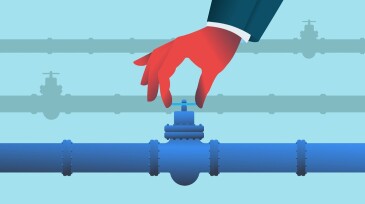
This paper presents an approach for safe, efficient, and cost-effective legacy well reabandonment.

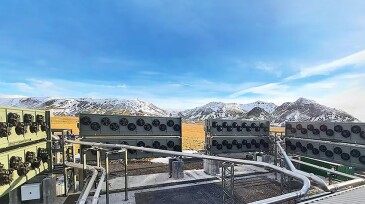
This paper presents a flexible, highly cost- and energy-efficient method of gas separation and CO₂ capture from many different gas mixtures with a large range of CO₂ concentrations.

Emissions management covers a wide array of topics such as carbon capture, use, and storage; emissions monitoring; flare management; methods to improve operational efficiency; carbon accounting; and the effect of emissions management on global and local economics. The papers published in the past year span all these subcategories.
-
 In the US, localized opposition and regulatory uncertainty are threatening to kill or severely limit the use of carbon capture, use, and storage (CCUS) in the fight against climate change.
 -
This paper presents a novel sustainable cost-effective method developed to scale up synthesis of Janus carbon nanoparticles from waste plastic feedstock by combined pyrolysis, chemical functionalization, and pulverization.
-
In this paper, the authors evaluate the simultaneous optimization of CO2 storage and oil recovery using multiple injection strategies.
-
The best wells in which to find lithium are in old conventional fields where rusty pump jacks are pulling out mostly water.
-
As money pours into the space, questions arise about whether the method of removing carbon from the atmosphere is the best investment.
-
The oil and gas industry’s sustainability and success depend on its ability to cultivate and nurture a skilled and knowledgeable workforce.
-
Declining costs to launch monitoring satellites, as well as artificial intelligence, which makes parsing terabytes of emissions data feasible, have given the oil and gas industry an emerging tool for environmental stewardship.
-
The Bipartisan Infrastructure Law will be used to distribute $7 billion to the seven projects across the country.
-
The Norwegian company’s third-quarter safety report shows the number of serious incidents declining.
-
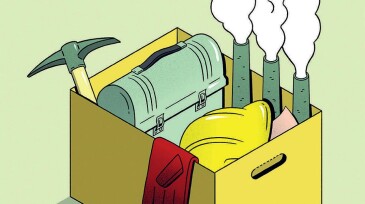
A Harvard economist is considering ways to protect workers from the inevitable economic shocks of the so-called “energy transition.”