HSE & Sustainability

The companies have released the Event Learning Taxonomy CLUE, which aims to improve the understanding of incidents beyond individual blame and toward clearer reporting and increased learning.
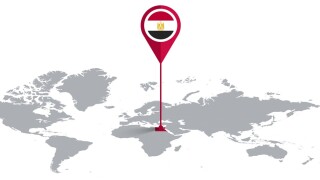
A memorandum of understanding between the companies targets technical services for safety and performance across Egypt’s onshore and offshore assets.

No injuries were reported, and work has been suspended on the North Sea rig while the BOP is recovered.
-
 The Oil and Gas Institute at Robert Gordon University is working with Drilling Systems and its drilling, well-control, and lifting simulator technology to help oil and gas companies identify ways to improve efficiencies and raise safety standards.
 -
In 2015, the United Nations ratified the 2030 Sustainable Development Goals. Technology will be critical in the pursuit of these ambitious targets, but the pace and scale of change creates risks that humanity must take very seriously.
-
A bipartisan group of House lawmakers introduced legislation that would ban oil and natural gas drilling in Alaska’s Arctic National Wildlife Refuge.
-
Management of produced water is driving subtle yet potentially consequential changes in certain regions. Contributing factors for seismicity and well pressurization, while different, share some elements. By assessing these common elements, partial risk profiles for both conditions can be assessed.
-
Is the adoption of sustainability practices a form of strategic differentiation that can lead to superior financial performance? Or, is it a strategic necessity that can ensure corporate survival but not necessarily outperformance?
-
Three papers selected from 2018 SPE ATCE look at the challenges and approaches to the treatment of increasing volumes of produced water.
-
Volatile organic compounds (VOCs) present in crude oil can be released to the atmosphere from storage tanks, waste waters, and equipment leaks. A pilot-scale sequential biotrickling/biofiltration unit was designed and tested for removal of VOCs from a wastewater sump.
-
Sourcing water for hydraulic fracturing, and disposing of produced water, are constraints and significant cost items in the Permian Basin. Some of the produced water can be treated and reused by using a water life cycle approach..
-
Finding water for hydraulic fracturing and then finding a use for it when it flows back are critical engineering problems to solve in the booming Permian Basin.
-
Culture, not controls, will drive the next phase of industry safety evolution, said presenters at a recent HSE conference.