HSE & Sustainability
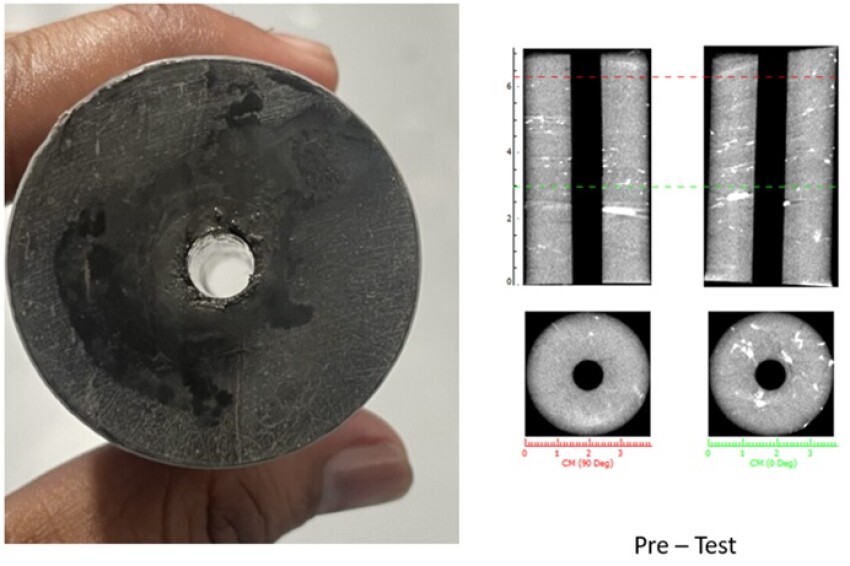
An investigative study examines the use of creeping shale formations as a more durable alternative to conventional cement barriers in carbon dioxide storage wells, potentially enabling safer long-term underground carbon storage.

The companies have released the Event Learning Taxonomy CLUE, which aims to improve the understanding of incidents beyond individual blame and toward clearer reporting and increased learning.

A memorandum of understanding between the companies targets technical services for safety and performance across Egypt’s onshore and offshore assets.
-
 Effective Prevention of Tuberculosis Transmission in Oil and Gas Workplaces: A Programmatic ApproachIntegrating a tuberculosis (TB) control program into existing operation systems has provided a sustained approach for effective and efficient prevention of TB transmission in the workplace.
 -
This paper presents a scientific method for reducing fatigue risks in oil and gas organizations that operate a slowly rotating shift schedule.
-
Getting to Zero and Beyond: The Path Forward, sets the stage for continuing the discussion across the industry of the essential steps the industry must take to sustain zero harm.
-
Relationships and engagement with communities in direct areas of influence is of paramount importance for successful exploration and production (E&P) operations.
-
This paper presents an analysis of the environmental aspects of the exploitation of unconventional reservoirs in order to evaluate the risk of the activity.
-
This paper examines the use of injury rates as a key performance indicator (KPI). It argues that, as a KPI, injury-frequency rate is no longer a valid measure.</p>
-
As operators seek lower water management costs, a pair of studies examines methods and technologies that could have a major impact on treatment and reuse for hydraulic fracturing operations and beyond.
-
Researchers at Texas Tech University have released a study into wastewater production and disposal in the Marcellus Shale, proposing disposal hubs across the state of Pennsylvania that could reduce trucking distances.
-
This paper aims to evaluate the applicability of input/output analysis to local content management as a tool to assess the relationship between the Brazilian government’s local content policy and social and economic effects of investment projects in the oil and gas and shipbuilding industry.
-
The US Bureau of Safety and Environmental Enforcement’s SafeOCS program has released its 2017 annual report on Blowout Prevention System Safety, noting 18 of 25 operators associated with rig operations in the Gulf of Mexico reported 1,129 equipment component failure events.