HSE & Sustainability

Winners of Alberta's Drilling Technology Challenge cover a range of technologies from robotics to enhance drilling rig safety to AI-enabled energy management, downhole sensing, well navigation, hybrid power systems, and geothermal energy.

Located along the North Sea, the Humber is expected to play a central role in the UK’s effort to achieve a net-zero emissions status by 2050.

This article addresses the challenges of managing water-soluble organics (WSOs) in offshore produced water. It provides a brief discussion of the chemistry, along with strategies and technologies that can be used to manage WSO levels in produced water, thus facilitating compliance with regulatory overboard water-quality guidelines.
-
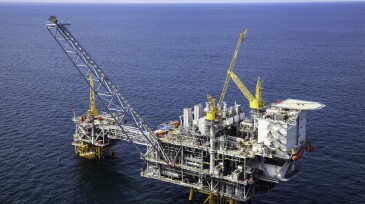
 Technology and partnerships play a pivotal role in how the oil industry finds and produces energy from frontier regions and brownfields, both now and in the future.
 -
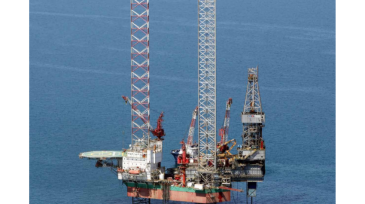
Kuwait Petroleum’s managing director of planning and finance said that more investment will be needed to keep Kuwait’s mature oil fields flowing while production is brought on stream.
-
B3 Insight and Nanometrics plan to integrate data from seismic monitoring with a water and subsurface data analytics platform.
-
This article is the second of a two-part series on produced-water management in the Gulf of Mexico and covers four themes: equipment, process configuration, operations, and effluent quality.
-
The new burner, created with the help of machine learning and additive manufacturing, promises high methane destruction efficiency and combustion stability even in windy conditions.
-
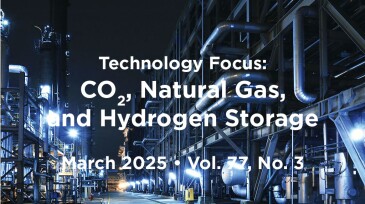
Transitioning to a low-carbon economy demands large-scale CO2, natural gas, and hydrogen storage. In this context, the application of AI/ML technology to uncover geochemical, microbial, geomechanical, and hydraulic mechanisms related to storage and solve complicated history-matching and optimization problems, thereby enhancing storage efficiency, has been prominently …
-
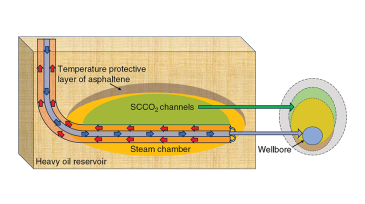
This paper presents a comprehensive model of geothermal exploitation for depleted deep heavy oil reservoirs through supercritical CO₂ injection.
-
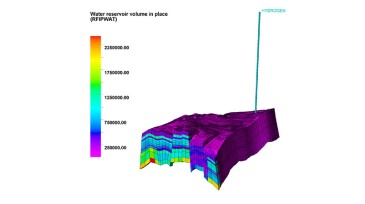
This paper aims to investigate the use of an optimization workflow to maximize both hydrogen storage and the net present value to obtain an optimal reservoir development strategy.
-
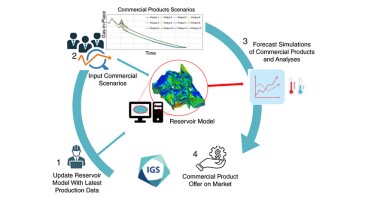
This paper describes how ramp-up operations and commercialization of an underground storage asset were combined, rapidly providing a wide range of commercial services to the Italian gas system while long-term UGS performance increased continuously.
-
The authors introduce a novel framework combining dynamic mode decomposition, a data-driven model-reduction technique, with direct data assimilation to streamline the calibration of carbon-dioxide plume evolution models.