HSE & Sustainability

Winners of Alberta's Drilling Technology Challenge cover a range of technologies from robotics to enhance drilling rig safety to AI-enabled energy management, downhole sensing, well navigation, hybrid power systems, and geothermal energy.

Located along the North Sea, the Humber is expected to play a central role in the UK’s effort to achieve a net-zero emissions status by 2050.

This article addresses the challenges of managing water-soluble organics (WSOs) in offshore produced water. It provides a brief discussion of the chemistry, along with strategies and technologies that can be used to manage WSO levels in produced water, thus facilitating compliance with regulatory overboard water-quality guidelines.
-
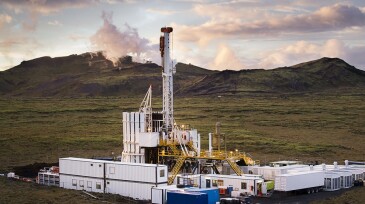
 Geothermal systems, which rely on extracting heat from deep within the Earth, face many of the same technical challenges that oil and gas operators have tackled for decades. Geothermal development can be advanced efficiently and economically by applying proven oil and gas technologies.
 -
With an increasing focus on clean energy, sustainable operations, emissions reduction, and data integration, the global energy landscape is evolving. Hence, overcoming HP/HT challenges is critical to ensuring energy security, optimizing production, and pacing our transition.
-
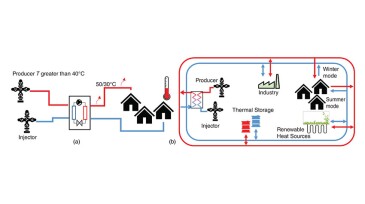
This study highlights how the recovery and reuse of existing hydrocarbon infrastructure can contribute to the diffusion of district-heating projects that implement the principles of the circular economy.
-
Few things are more essential to the now global hydraulic fracturing revolution than access to fresh water, yet this dependency use has raised environmental concerns and operational challenges.
-
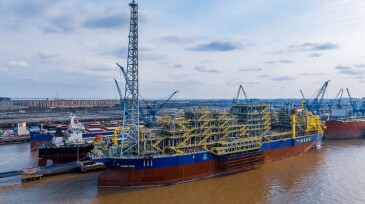
The floating production, storage, and offloading vessel is the first in the world with a postcombustion carbon capture pilot system.
-
The companies have announced they will work together to integrate geothermal well engineering and project delivery globally.
-
A recent report from Wood Mackenzie highlights the role of natural gas in supporting renewables and reducing emissions.
-
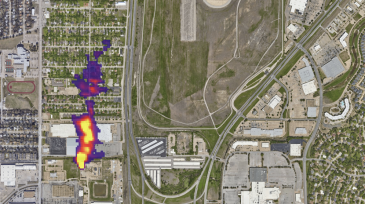
A new study finds that, of the roughly 15 million tonnes of methane coming from onshore oil and gas activities in the continental US annually, 70% comes from smaller, dispersed sources emitting less than 100 kg of methane per hour and 30% of emissions are from sites releasing less than 10 kg per hour.
-
This paper presents a comprehensive synthesis of available research evaluating the influence of gamification on cognitive, motivational, and behavioral learning outcomes.
-
This article explores three key themes for the oil and gas sector: the evolution of methane regulation at the state and federal levels, a preliminary forecast of why and how methane regulation will continue, and practical ways the oil and gas sector can prepare for enhanced enforcement scrutiny.