HSE & Sustainability
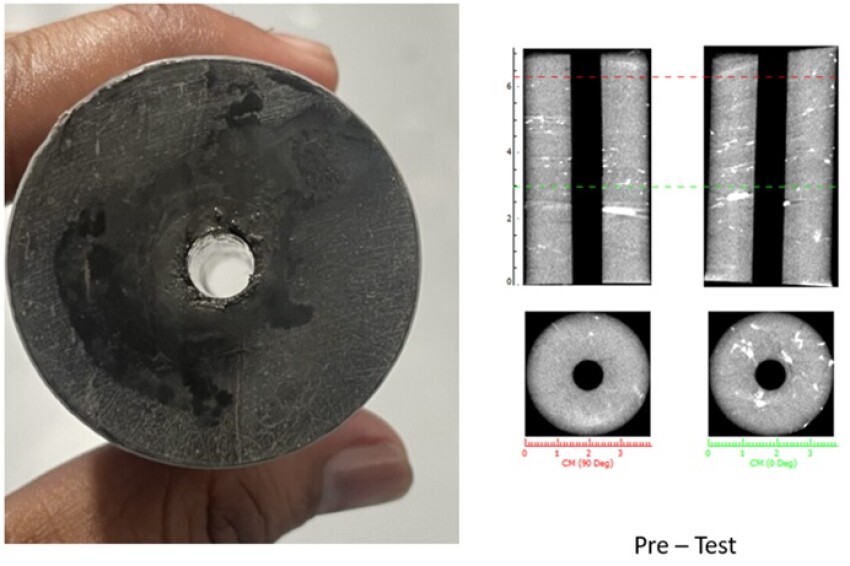
An investigative study examines the use of creeping shale formations as a more durable alternative to conventional cement barriers in carbon dioxide storage wells, potentially enabling safer long-term underground carbon storage.

The companies have released the Event Learning Taxonomy CLUE, which aims to improve the understanding of incidents beyond individual blame and toward clearer reporting and increased learning.
A memorandum of understanding between the companies targets technical services for safety and performance across Egypt’s onshore and offshore assets.
-
 The high level of dissolved iron commonly present in the Marcellus waters of Pennsylvania and West Virginia adversely affects the ability of scale inhibitor to inhibit calcium carbonate scale. This study tests two new products under a range of conditions.
 -
Higher oil prices has created increased interest in chemical enhanced oil recovery (CEOR) using polymers, surfactants, and alkalis. This technology poses some special challenges, especially around water treatment.
-
This paper reviews the key areas for facility designers and engineers to include when designing facilities to ensure safe facilities. Use and incorporation of the principles outlined in this paper should enable engineers and designers to build safe facilities that reduce the risk of major incidents.
-
As the development of US shale plays expands to undeveloped or underdeveloped areas, the environmental issues related to surface facilities move to front and center. Operators, regulators, politicians, and the general public have become more aware of and concerned about environmental effects.
-
Water handling is becoming increasingly important as a technical and economic tool for improved oil recovery and enhanced oil recovery (EOR) projects. A global series of workshops to address these issues has been planned.
-
This paper describes the project evolution, from the first study to the implementable concept of energy production using the associated gas of two onshore facilities in Tunisia. Despite complex composition, high CO2, high H2S, and relatively low quantities, a solution was developed successfully.
-
Although offshore disasters are rare, they have resulted in significant loss of human life, environmental damage, and negative impacts on the larger society. We vow to learn from them, and address the technical challenges, but less often explore the role of culture, such as safety culture.
-
Minimizing HSE Impacts During Design and Construction of a Major Gas Pipeline Through the Baltic SeaDuring the design of two parallel gas pipelines from Russia to Germany through the Baltic Sea, major design changes were made to minimize project impacts, resulting in rapid approval by all five affected countries.
-
Recent accidents in the oil and gas industry have renewed interest in whether behavioral sciences can provide insights that can be translated into safety interventions.
-
This paper addresses a “conceptual model” for an overfill-protection program, based on a recent industry example. Key portions of the programmatic and overfill-equipment aspects will be addressed.