HSE & Sustainability

Winners of Alberta's Drilling Technology Challenge cover a range of technologies from robotics to enhance drilling rig safety to AI-enabled energy management, downhole sensing, well navigation, hybrid power systems, and geothermal energy.

Located along the North Sea, the Humber is expected to play a central role in the UK’s effort to achieve a net-zero emissions status by 2050.

This article addresses the challenges of managing water-soluble organics (WSOs) in offshore produced water. It provides a brief discussion of the chemistry, along with strategies and technologies that can be used to manage WSO levels in produced water, thus facilitating compliance with regulatory overboard water-quality guidelines.
-
 The chair of the Texas Railroad Commission is defending her seat this November at a time when the state’s oil and gas industry is booming but the agency that regulates it is facing criticism over safety concerns.
 -
But no one appears really happy with the cumulative impact rules lauded by the Colorado Energy and Carbon Management Commission as “a big step forward.”
-
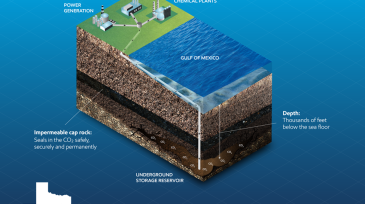
Consulting and engineering firm Wood is leading a joint industry partnership to create industry guidelines for carbon dioxide specifications to accelerate sustainable carbon capture, use, and storage projects.
-
The financial losses come from reduced productivity, high employee turnover, or the loss of skilled labor as a direct result of unmanaged mental health challenges.
-
The presence of marine mammals during offshore infrastructure work is a major environmental concern. To safeguard species and their natural habitats, more and more local legislation imposes a cap on sound levels from offshore activities.
-
The increase in flaring emissions was led by operations in the Middle East, Africa, and Russia.
-
The $220-million carbon capture and storage project is one of the world's largest, with a nameplate injection capacity of 1.7 mtpa.
-
The agreement with state officials comes more than 3 years after the supermajor proposed building the world's largest carbon storage hub offshore the Houston area.
-
DNV’s Energy Transition Outlook 2024 projects continued growth in solar; slower growth in wind; and declines in coal, oil, and gas, while hydrogen and carbon capture projects are struggling.
-
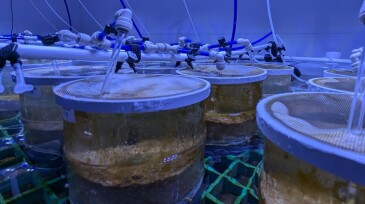
Radioactive elements occur naturally at low levels in oil and gas basins. As oil and gas is extracted, these elements can accumulate in infrastructure. Now, scientists in Australia are investigating the toxicity of different radiation doses to marine organisms.