HSE & Sustainability
The Pawnee Carbon Sequestration Project, which would use a repurposed well, is planned to capture and store up to 400,000 tonnes of carbon dioxide, with first injection targeted for early 2027.

DNV notes that energy and industrial process-related carbon emissions will have dropped by 2050 by only 44% from today’s level, not even halfway to the net-zero pledge envisioned by the Paris climate agreement.

SPE's new Asset Integrity Technical Section brings together industry experts to advance best practices in reliability engineering, asset integrity, risk reduction, and infrastructure performance. The global community will focus on the safe, reliable, and sustainable operation of energy assets across both traditional and emerging energy sectors.
-
 SPE’s 2020 International Conference and Exhibition on Health, Safety, Environment, and Sustainability is scheduled for 17–19 March in Bogotá, Colombia. In this video, SPE Technical Director Johana Dunlop explains why all HSE and sustainability practitioners should try to attend.
-
The companies will focus on research and development to reduce CO2 emissions and promote the circular economy.
-
The company said its goals underscore its strong environmental, social, and governance performance as it responds to rising global energy demand. In addition, it said, the goals are aligned with the United Nation’s Sustainable Development Goals.
-
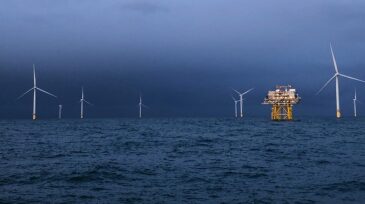
The international Ocean Renewable Energy Action Coalition, spearheaded by Ørsted and Equinor, has been formed to advance sustainable deployment of ocean-based renewable energy and mitigate the harmful effects of climate change.
-
As the pressure to act on climate change builds, the industry should consider a range of options.
-
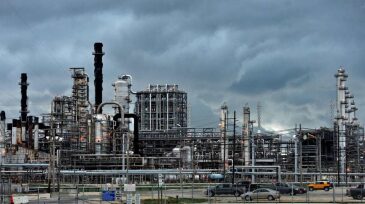
Oil and gas industry expansions could add as much greenhouse gas pollution as the equivalent of 50 coal plants by 2025—with much of that increase coming from Texas and Louisiana—at a time when pressure to slow down global warming rises, a new report found.
-
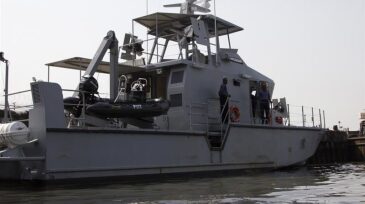
The nonprofit group Oceans Beyond Piracy says the cost of maritime piracy in West Africa was more than $800 million in 2017.
-
Twenty safety and health leaders from various industries were asked to give their predictions on the trends they see most affecting occupational health and safety in 2020 and beyond, and several themes emerged.
-
The company has launched new climate ambitions to reduce the absolute greenhouse gas emissions from its operated offshore fields and onshore plants in Norway by 40% by 2030, 70% by 2040, and to near zero by 2050.
-
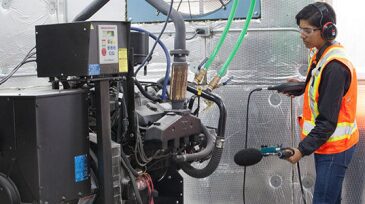
Managing noise exposure is complex in terms of accurately assessing sound levels, identifying and ranking the dominant noise sources, and finding effective control solutions.