HSE & Sustainability
This paper presents an approach to the identification, selection, and implementation of initiatives for sustainable water management, withdrawal reduction, and water valorization.

This paper presents an experiment investigating dissolution of basaltic primary minerals and conditions favorable for secondary phase formation under deep subsurface storage conditions.

This study aims to investigate the efficacy of chemical additives strontium chloride and barium hydroxide in accelerating CO₂ trapping mechanisms, their effect on dissolution of carbonate-bearing minerals, and resulting poroelastic changes in the host rock.
-
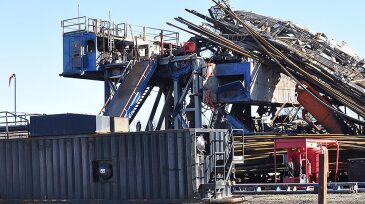
 Federal safety regulators, state oil and gas authorities, and the energy industry need to close regulatory gaps that contributed to the worst oil drilling accident in nearly a decade, the board said in an unprecedented report.
 -
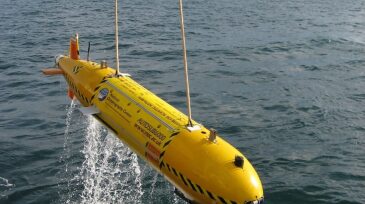
Funded by a €10.6 million grant from the European Union’s Horizon 2020 program, the ambitious project will, for the first time, undertake an oceanwide approach to understanding the factors that control the distribution, stability, and vulnerability of deep-sea ecosystems.
-
The oil industry is investigating carbon capture and sequestration projects after Congress passed expanded tax credits last year. But questions linger about how much industry investments will actually lower greenhouse gases.
-
The Bureau of Safety and Environmental Enforcement is launching a safety initiative to bring critical information directly to offshore workers on the outer continental shelf. The BSEE!Safe program uses text messages to send links to its published Safety Alerts and Bulletins.
-
A key driver of socioeconomic change in any project context can be rapid population growth. Labor influx can have positive effects, but it often results in adverse effects. This paper summarizes a portfolio review focused on labor influx and social effects commissioned by the World Bank.
-
Drones are becoming an important tool for energy companies looking to improve on-site safety and operational efficiencies, and the industry is looking for the best way to maximize their value. What are some the challenges in getting these programs off the ground?
-
Although OSHA does not have a specific standard that covers working in hot environments, the Occupational Safety and Health Act requires places of employment that are "free from recognizable hazards that are causing or likely to cause death or serious harm." This includes heat-related hazards.
-
The UN's sustainable development goals were designed to engage the private sector in addressing the world’s most pressing challenges. Four years into the timeline, the question is whether companies are advancing serious solutions or are simply embarking on a massive public relations charade.
-
Researchers at the University of Massachusetts, Amherst, performed a life-cycle assessment for training several common large AI models. They found that the process can emit more than 626,000 lbm of carbon dioxide equivalent—nearly five times the lifetime emissions of the average American car.
-
Devon Energy announced that it plans to lower detectable emissions at its US production sites by at least 12.5% in 6 years.