HSE & Sustainability
This paper presents an approach to the identification, selection, and implementation of initiatives for sustainable water management, withdrawal reduction, and water valorization.

This paper presents an experiment investigating dissolution of basaltic primary minerals and conditions favorable for secondary phase formation under deep subsurface storage conditions.

This study aims to investigate the efficacy of chemical additives strontium chloride and barium hydroxide in accelerating CO₂ trapping mechanisms, their effect on dissolution of carbonate-bearing minerals, and resulting poroelastic changes in the host rock.
-
 Recently, Nigeria's Department of Petroleum Resources issued guidelines in furtherance of the objectives of the Flare Gas (Prevention of Waste and Pollution) Regulations, 2018.
 -
Since 2011, Equinor has reduced carbon dioxide emissions from its logistical operations for the Norwegian continental shelf (NCS) by 600,000 tonnes. The company’s ambition is to halve emissions in the NCS supply chain by 2030.
-
The New Owner Clean Air Act Audit Program, tailored specifically for oil and natural gas producers, will focus on offering more flexibility to new company owners who choose to self-audit their emissions and report any failures to meet EPA’s regulations.
-
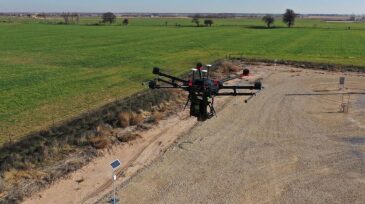
Drones will be just one of the tools that the service company uses in its drive toward net-zero carbon emissions.
-
While much progress has been made to reduce flaring, associated gas continues to be flared at thousands of oil production sites around the world. A further reduction may be achieved through a market-oriented approach to commercialization
-
The world can limit global warming to 1.5℃ and move to 100% renewable energy while still preserving a role for the gas industry and without relying on technological fixes such as carbon capture and storage, according to this new analysis.
-
A host of women and men gathered at the inaugural SPE-GCS Women in Energy Congress to discuss the gender-gap challenges facing oil and gas today. How does greater diversity and inclusion help the industry progress, and what can companies do to encourage more diverse and inclusive environments?
-
The new SPE Sustainability Award is the first industry award recognizing individuals contributing significantly to advancing industry practice.
-
The World Economic Forum's Global Risks Report 2019 highlights ongoing geopolitical and geoeconomic tension as the biggest risk factor facing humanity’s progress.
-
Sami Alnuaim, 2019 SPE president, welcomed the addition of two new oil and gas sustainability initiatives at the University of Houston and highlighted a number of ways the industry is already acting as a good global steward.