HSE & Sustainability
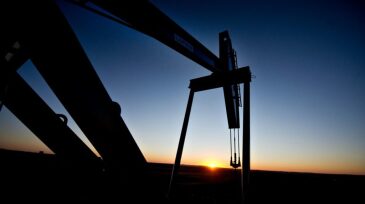
The Pawnee Carbon Sequestration Project, which would use a repurposed well, is planned to capture and store up to 400,000 tonnes of carbon dioxide, with first injection targeted for early 2027.

DNV notes that energy and industrial process-related carbon emissions will have dropped by 2050 by only 44% from today’s level, not even halfway to the net-zero pledge envisioned by the Paris climate agreement.

SPE's new Asset Integrity Technical Section brings together industry experts to advance best practices in reliability engineering, asset integrity, risk reduction, and infrastructure performance. The global community will focus on the safe, reliable, and sustainable operation of energy assets across both traditional and emerging energy sectors.
-
 A pilot project demonstrates that facilities design plays an important role in providing sources of CO2 for the gas-handling process for injection into a carbonate formation as a tertiary recovery mechanism.
-
Natural gas, coupled with carbon capture and storage (CCS), could provide cheap and reliable energy in the long term and mitigate climate change. Gas-to-wire (GTW) generates electricity from natural gas at or near the field. This study applies an integrated GTW/CCS scheme to a gas-production field.
-
Collaboration is critical to achieving recognition of the scope and value of carbon capture and storage and achieving acceptance for specific projects.
-
Structures in the ocean made by people, such as oil and gas rigs, shipwrecks, or renewable energy devices, could help protect sea creatures under threat from human pressure and climate change, according to a study in Scientific Reports.
-
Maersk Supply Service is set to provide marine support to The Ocean Cleanup, a Dutch nonprofit that is developing advanced technologies to rid the oceans of plastic.
-
This systematic review aimed to evaluate the association between shift work and eating habits and suggests that shift work can affect the quality of workers’ diets. Shift workers show changes in meal patterns, skipping more meals and consuming more food at unconventional times.
-
How can corporate trainers prepare employees for dangerous or extraordinary workplace scenarios? Virtual-reality technology offers immersive learning opportunities for an increasingly broad range of experiences.
-
The biggest problem is not in the everyday operation or use of tools or machinery, no matter how dangerous they may be. It’s when plans veer away from the day-to-day routine that’s the biggest problem.
-
The Central Finance Board of the Methodist Church is developing a system for analyzing company ethics, and top mining and oil companies will be graded by the end of 2018.
-
Academic scientists and advocacy groups are urging the Environmental Protection Agency to withdraw and rewrite proposed guidelines for determining which scientific findings to use when evaluating the safety of toxic chemicals.