HSE & Sustainability

The Pawnee Carbon Sequestration Project, which would use a repurposed well, is planned to capture and store up to 400,000 tonnes of carbon dioxide, with first injection targeted for early 2027.

DNV notes that energy and industrial process-related carbon emissions will have dropped by 2050 by only 44% from today’s level, not even halfway to the net-zero pledge envisioned by the Paris climate agreement.

SPE's new Asset Integrity Technical Section brings together industry experts to advance best practices in reliability engineering, asset integrity, risk reduction, and infrastructure performance. The global community will focus on the safe, reliable, and sustainable operation of energy assets across both traditional and emerging energy sectors.
-
 ProSep’s Osorb Media Systems are providing a unique solution for treating the water coming from chemical enhanced oil recovery operations and removing the dissolved hydrocarbons.
-
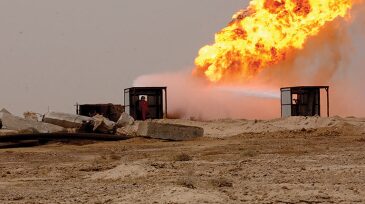
Well fires look all consuming, but proving they burn all the oil without leaving a spill behind required the efforts of Boots Coots plus a rocket scientist and a lot of high powered computer equipment.
-
A new report on shale gas from UNCTAD addresses the balance between providing affordable energy to developing countries and the agency’s climate change goals.
-
The safety and predictability of offshore operations could be greatly improved by a new project that seeks to address the risks posed by human behaviors in the oil and gas industry.
-
On average, the American workplace is more dangerous than the Latvian, Czech, Slovakian, Greek, Portuguese, Spanish, Polish, Hungarian, or Estonian workplace. Considering that the United States has a much higher GDP per capita than all of these countries, this seems unlikely. Yet, it’s true.
-
In the latest effort by municipalities seeking to hold fossil fuel companies liable for their alleged contribution to climate change, the city and county of Boulder, Colorado, and the county of San Miguel filed suit against two companies on 17 April.
-
On 26 April 2018, Canada's minister of environment and climate change announced new regulations under the Canadian Environmental Protection Act, 1999, to reduce methane emissions in the oil and gas sector by almost half.
-
ExxonMobil announced greenhouse gas reduction measures that are expected to lead to significant improvements in emissions performance by 2020, including a 15% decrease in methane emissions and a 25% reduction in flaring.
-
Longmont, Colorado's City Council voted to give final approval to the city's $3 million agreement with TOP Operating and Cub Creek Energy that officials have said will end oil and gas drilling from the surfaces of properties within the city, as well as city-owned properties east of Longmont.
-
An improved occupational health and safety system comes into effect on 1 June to better protect Alberta workers and ensure they have the same rights as other Canadians.