HSE & Sustainability
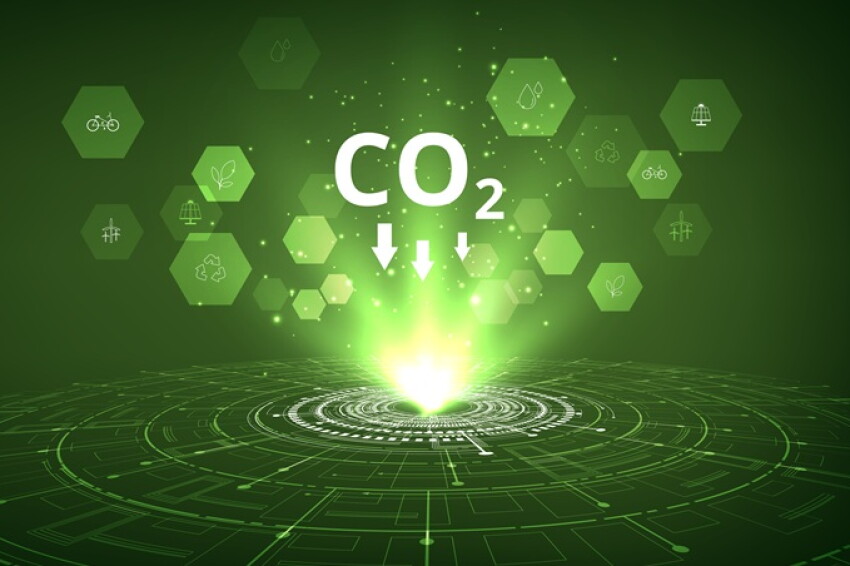
The Pawnee Carbon Sequestration Project, which would use a repurposed well, is planned to capture and store up to 400,000 tonnes of carbon dioxide, with first injection targeted for early 2027.

DNV notes that energy and industrial process-related carbon emissions will have dropped by 2050 by only 44% from today’s level, not even halfway to the net-zero pledge envisioned by the Paris climate agreement.

SPE's new Asset Integrity Technical Section brings together industry experts to advance best practices in reliability engineering, asset integrity, risk reduction, and infrastructure performance. The global community will focus on the safe, reliable, and sustainable operation of energy assets across both traditional and emerging energy sectors.
-
 Abdulmunim Al Kindy, upstream director at the Abu Dhabi National Oil Company, delivered the keynote address at SPE’s international HSE conference in Abu Dhabi, saying that fundamental changes in work practices mean that effective HSE protection measures must remain at the center of operations.
-
The Society of Petroleum Engineers has released the technical report “Getting to Zero and Beyond: The Path Forward.” The report consolidates lessons and visions of safety from hundreds of leaders in the oil and gas industry and presents recommendations for companies and the industry as a whole.
-
The 2018 Outstanding Young Professional Award was presented to BP’s Marcin Nazaruk at this year’s SPE International Conference on Health, Safety, Security, Environment, and Social Responsibility in Abu Dhabi.
-
This paper suggests that the value of environmental monitoring during seismic acquisition can extend further than compliance, suggesting that the design and application of a comprehensive environmental monitoring program can bring substantial environmental benefits and extend working relationships.
-
Woodside has joined BP, Eni, ExxonMobil, Gazprom, Repsol, Shell, Statoil, Total ,and Wintershall in signing the guiding principles that commit it to further reduce methane emissions from the natural gas assets it operates.
-
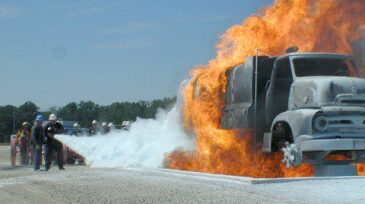
When selecting extinguishers, most organizations insist on quality, often deferring to the UL fire ratings with the expectation that higher ratings mean better firefighting capability. For some fires, that is true; however, in high-risk environments, the opposite can be true.
-
An 18-month project will develop and trial a mobile robot for autonomous operational inspection of Total facilities.
-
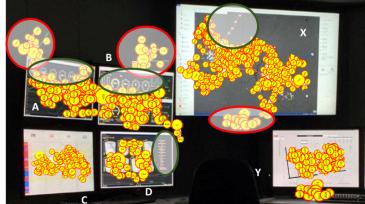
Lack of situational awareness in drilling operations has become an important safety factor. This study presents experiments conducted in a virtual-reality drilling simulator equipped with eye-tracking technology that can be used to distinguish between less and more aware/alert participants.
-
Shell—Yes, That Shell—Just Outlined a Radical Scenario for What It Would Take To Halt Climate ChangeRoyal Dutch Shell outlined a scenario in which, by 2070, we would be using far less of the company’s own product—oil—as cars become electric, a massive carbon storage industry develops, and transportation begins a shift toward a reliance on hydrogen as an energy carrier.
-
This year started at full tilt in the HSE and sustainability discipline with the Human Factors Technical Section contributing significantly to a well-attended National Academies of Science workshop in Houston.