HSE & Sustainability
The Pawnee Carbon Sequestration Project, which would use a repurposed well, is planned to capture and store up to 400,000 tonnes of carbon dioxide, with first injection targeted for early 2027.

DNV notes that energy and industrial process-related carbon emissions will have dropped by 2050 by only 44% from today’s level, not even halfway to the net-zero pledge envisioned by the Paris climate agreement.

SPE's new Asset Integrity Technical Section brings together industry experts to advance best practices in reliability engineering, asset integrity, risk reduction, and infrastructure performance. The global community will focus on the safe, reliable, and sustainable operation of energy assets across both traditional and emerging energy sectors.
-
 On 23 May 2017,the Ukrainian parliament adopted the Law of Ukraine "On Environment Impact Assessment." The newly adopted law requires mandatory assessment of effect on the environment of certain industrial objects and activities.
-
Environmental Protection Agency Administrator Scott Pruitt said in his first testimony before Congress on 7 December that he plans to replace the Obama-era Clean Power Plan, instead of just killing it outright.
-
Inventys is receiving $2.6 million from Natural Resources Canada through its Energy Innovation Program to support the development of a 30-tonne-per-day carbon-dioxide-capture pilot plant at Husky Energy’s Pikes Peak South Lloyd thermal project.
-
Between 2005 and 2015, energy-related carbon dioxide emissions decreased in 43 states (including the District of Columbia) and increased in 8 states. On a per capita basis, energy-related carbon dioxide emissions decreased in 49 states (including the District of Columbia) and increased in 2 states.
-
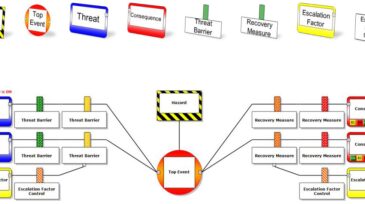
This paper describes an approach to standardizing proactive incident investigation to failed or impaired barriers and risk management.
-
US Secretary of Energy Rick Perry and Khalid Al Falih, Saudi minister of energy, industry, and mineral resources, signed a memorandum of understanding to establish a framework for mutually beneficial cooperation in the area of clean fossil fuels and carbon management.
-
At the 2013 G8 leaders’ summit in Northern Ireland, Canada announced that it would take action to enhance the transparency of payments to governments made by Canadian extractive companies by introducing mandatory reporting. The resulting legislation came into force on 1 June 2015.
-
One of the keys to growing a safety culture is to build levels of employee engagement. The reason for that is that the more engaged front-line employees are, the more ownership they assume for their work domain.
-
Between 2009 and 2016, SPE facilitated a series of global sessions to develop ideas for the future advancement of health, safety, and the environment in the industry. The result is the technical report “Getting to Zero and Beyond: The Path Forward.”
-
A look at how policy, future workforce perception, and industry standards will shape energy companies in the near and distant future.