HSE & Sustainability
The Pawnee Carbon Sequestration Project, which would use a repurposed well, is planned to capture and store up to 400,000 tonnes of carbon dioxide, with first injection targeted for early 2027.

DNV notes that energy and industrial process-related carbon emissions will have dropped by 2050 by only 44% from today’s level, not even halfway to the net-zero pledge envisioned by the Paris climate agreement.

SPE's new Asset Integrity Technical Section brings together industry experts to advance best practices in reliability engineering, asset integrity, risk reduction, and infrastructure performance. The global community will focus on the safe, reliable, and sustainable operation of energy assets across both traditional and emerging energy sectors.
-
 Public acceptance is a major challenge for the siting of facilities. The offering of compensation to communities potentially helps to create the perception of a fairer distribution of local risks and nonlocal benefits. This may help to prevent or solve siting controversies.
-
Personal risk factors such as heat acclimation as well as environmental factors and high metabolic rate during work are the major determinants of heat-related illnesses.
-
The flight ban imposed on the Airbus H225 and AS332 L2 in Norway and the UK has been lifted by their respective civil aviation regulators.
-
BP has confirmed it will not reintroduce Super Puma Helicopters until the completion of an investigation into last year’s fatal crash.
-
The Trump administration asked a federal appeals court on 7 July to allow it to delay enforcement of an Obama administration rule to limit methane pollution from oil and natural gas drilling.
-
Why is designing with human error in mind so critical? Consider that nearly 80% of all offshore facility accidents are caused by human errors, and 64% of these accidents happen during operations.
-
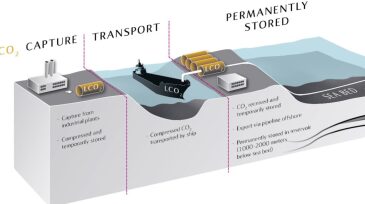
Gassnova has assigned Statoil to evaluate the development of carbon storage on the Norwegian continental shelf. This will be the first storage site in the world receiving carbon dioxide from several industrial sources.
-
A federal appeals court in Washington ruled on 3 July that the head of the Environmental Protection Agency (EPA) overstepped his authority in trying to delay implementation of an Obama administration rule requiring oil and gas companies to monitor and reduce methane leaks.
-
In the 4 months since he took office as the Environmental Protection Agency’s administrator, Scott Pruitt has moved to undo, delay, or otherwise block more than 30 environmental rules.
-
Anadarko Petroleum said late on 30 June that it has tested more than 4,000 active oil and gas lines and plugged another 2,400 inactive ones per a state order issued after a fatal home explosion in Firestone, Colorado, in April.