HSE & Sustainability

The Pawnee Carbon Sequestration Project, which would use a repurposed well, is planned to capture and store up to 400,000 tonnes of carbon dioxide, with first injection targeted for early 2027.

DNV notes that energy and industrial process-related carbon emissions will have dropped by 2050 by only 44% from today’s level, not even halfway to the net-zero pledge envisioned by the Paris climate agreement.

SPE's new Asset Integrity Technical Section brings together industry experts to advance best practices in reliability engineering, asset integrity, risk reduction, and infrastructure performance. The global community will focus on the safe, reliable, and sustainable operation of energy assets across both traditional and emerging energy sectors.
-
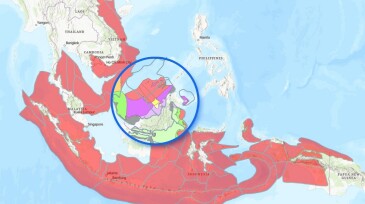
 The company has added a new Southeast Asia carbon storage study to its growing library of carbon capture, use, and storage opportunities.
-
While there are many physical hazards present in offshore environments, such as noise pollution, vibration, radiation, and thermal extremes, oil and gas companies must stay committed to promoting employee safety with regular maintenance checks, ongoing training programs and a continued focus on employee health.
-
The areas are expected to have the potential to supply 2.4 GW of clean renewable energy.
-
This article describes how leadership involvement in office and site visits can support and sustain an outstanding safety culture and outlines added benefits of conducting office and site visits.
-
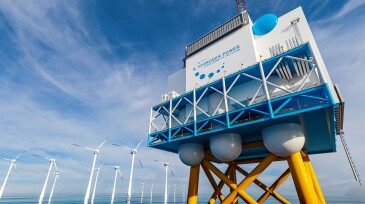
This paper assesses the opportunity for an integrated and circular approach to developing the offshore energy sector for the energy transition. It evaluates how offshore wind, green hydrogen production, and heritage oil and gas expertise can be brought together to benefit all sectors to support a viable green hydrogen and wind economy.
-
The Australian oil and gas company said the new commitments underscore its goal to achieve net zero Scope 1 and 2 emissions by 2040.
-
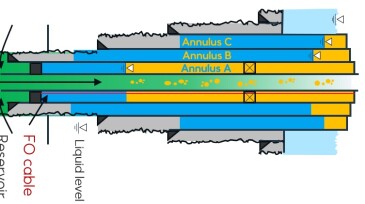
Distributed fiber-optic sensing data from distributed temperature sensing and distributed acoustic sensing can be used to monitor annuli liquid levels in production wells, further allowing calculation of leak rates and inference of leak path.
-
The site, designed to provide up-to-date information on dispersants and their use, includes video explainers, frequently asked questions, quick facts, good practice guidance, peer-reviewed papers, and technical studies.
-
The agency estimated the updated standard will prevent up to 4,500 premature deaths and 290,000 lost workdays, yielding up to $46 billion in net health benefits in 2032.
-
From January 2015 to July 2022, the Occupational Safety and Health Administration received reports of 2,101 severe injuries among oil and gas extraction workers. Contract workers in the service and drilling subindustries experienced disproportionately more work-related injuries compared with those in the operation subindustry.