HSE & Sustainability
The Pawnee Carbon Sequestration Project, which would use a repurposed well, is planned to capture and store up to 400,000 tonnes of carbon dioxide, with first injection targeted for early 2027.

DNV notes that energy and industrial process-related carbon emissions will have dropped by 2050 by only 44% from today’s level, not even halfway to the net-zero pledge envisioned by the Paris climate agreement.

SPE's new Asset Integrity Technical Section brings together industry experts to advance best practices in reliability engineering, asset integrity, risk reduction, and infrastructure performance. The global community will focus on the safe, reliable, and sustainable operation of energy assets across both traditional and emerging energy sectors.
-
 The energy company is following decisions by five big shipping firms as Houthi militants step up attacks on vessels.
-
The Gulf region can leverage its energy history, infrastructure, capacity, and expertise to lead the energy transition.
-
The project aims to store 5 million tons of CO₂ annually, equivalent to a third of the total CO2 emissions from Dutch domestic vehicles in 1 year.
-
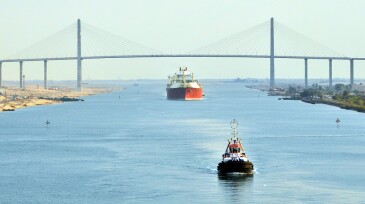
Attacks by the Iran-backed Houthi militants on ships passing through the Bab al-Mandab Strait and the Red Sea have surged recently, adding security risks to ships passing through the Suez Canal.
-
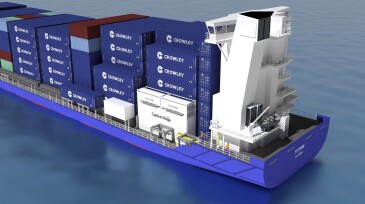
A pilot project will explore onboard carbon capture for container ships, and two heavy-hitters are teaming up to find decarbonization paths in the Asia Pacific region. Elsewhere, wind and solar are on track to pass coal in the race to generate electricity.
-
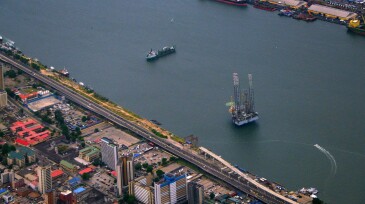
This paper investigates the extent to which corporate social responsibility (CSR) initiatives of oil companies operating in the Niger Delta area of Nigeria contribute to the development of host communities across the region.
-
The memorandum of understanding aims to improve digital work flows in the emerging carbon capture and storage industry.
-
For today’s oil and gas companies, digital twins offer untapped potential to decarbonize the leading source of their emissions—field production.
-
Achieving Safety at Sea—The Safety Programs of the Nigerian Upstream Petroleum Regulatory CommissionThe aim of this paper is to discuss the various safety programs adopted by the Nigerian Upstream Petroleum Regulatory Commission to reduce accidents in swamp and offshore areas, in which the bulk of the oil and gas operations occur.
-
The French company inked agreements at COP28 to share its newly developed CO2 and methane detection platform with NOCs in Brazil, Angola, and Azerbaijan.