HSE & Sustainability
The Pawnee Carbon Sequestration Project, which would use a repurposed well, is planned to capture and store up to 400,000 tonnes of carbon dioxide, with first injection targeted for early 2027.

DNV notes that energy and industrial process-related carbon emissions will have dropped by 2050 by only 44% from today’s level, not even halfway to the net-zero pledge envisioned by the Paris climate agreement.

SPE's new Asset Integrity Technical Section brings together industry experts to advance best practices in reliability engineering, asset integrity, risk reduction, and infrastructure performance. The global community will focus on the safe, reliable, and sustainable operation of energy assets across both traditional and emerging energy sectors.
-
 Enhanced solutions take detection of hazardous, toxic gas to the next level.
-
This paper provides an overview of strategies, approaches, technologies, and tools that enable companies to prioritize social-good, natural processes and restoration of natural resources as part of business and operations.
-
A consortium of 20 organizations, REX-CO2, including research institutions, operators, and regulatory authorities, studied mature wells in two areas of the UK Continental Shelf. Subsurface data were evaluated and verified the wells’ potential suitability for both reuse and CO2 injection and storage.
-
The CO2 capture capacity of all CCS facilities under development increased 44% over the past 12 months, bringing the total capacity of those projects to 244 mtpa of CO2.
-
Data from member companies reveals an increased intensity in greenhouse-gas emissions for 2021. And, while flaring increased, too, long-term trends on that practice are clearly moving downward.
-
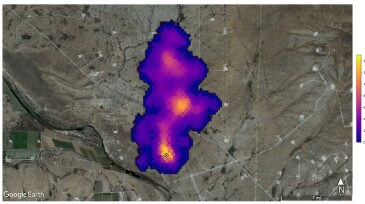
Built to help scientists understand how dust affects climate, the Earth Surface Mineral Dust Source Investigation can also pinpoint emissions of the potent greenhouse gas.
-
Investors say they value a company’s data on sustainability almost as much as they value its financial data. They need to be able to trust it as much, too.
-
The company says its methane intensity has gone down by more than 50% since 2016.
-
A panel discussion at Canada’s Safest Employers Awards centered on climate change as one of the top risk factors safety experts need to prepare for as they help guide their organizations into an uncertain future.
-
According to the study conducted by professors at Boston College, the effects were most significant among Black and Asian women.