HSE & Sustainability

The AI revolution isn't just digital. This article examines how geology underpins the convergence of AI, energy, carbon management, and the infrastructure powering frontier LLMs.

Winners of Alberta's Drilling Technology Challenge cover a range of technologies from robotics to enhance drilling rig safety to AI-enabled energy management, downhole sensing, well navigation, hybrid power systems, and geothermal energy.

Located along the North Sea, the Humber is expected to play a central role in the UK’s effort to achieve a net-zero emissions status by 2050.
-
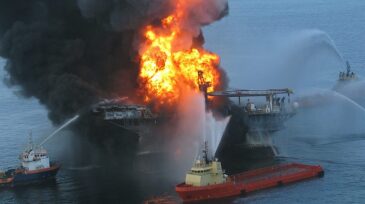
 Research suggests that the formation of the deep plume was unrelated to the addition of subsea dispersants.
 -
Scientists have found that man-made structures in the North Sea could play a crucial role in holding coral populations together and increasing their resilience.
-
Had Proposition 112 passed, Colorado would have approved the country's largest mandatory buffer between new wells and homes, schools, waterways, and other areas deemed vulnerable: 2,500 ft, five times the existing standard of 500 ft.
-
Wearable devices can notify workers of hazards, provide useful safety data to employers, and improve safety on the worksite.
-
Elevated concentrations of strontium, an element associated with oil and gas waste waters, have accumulated in the shells of freshwater mussels downstream from wastewater disposal sites, according to researchers from Penn State and Union College.
-
The tool, called the Field Analysis of Silica Tool, works with commercially available Fourier-transform infrared analyzers to determine a worker’s exposure to respirable crystalline silica dust, providing detailed results immediately following a worker’s shift.
-
An online seminar set for 14 November will introduce IPIECA's new Community Liaison Officers Team Building and Management Guidance.
-
The UK’s offshore oil and gas industry continued to see improvement across a broad range of health and safety indicators last year, according to a key insight published by Oil & Gas UK.
-
Colorado's Proposition 112 would increase the minimum distance required between new oil and gas wells and homes, schools, and other designated areas to 2,500 ft—more than twice the current required distance — in an effort to protect public health.
-
A new study offers answers to questions that have puzzled policymakers, researchers,and regulatory agencies for decades: How much methane is being emitted from natural gas operations across the US? And why have different estimation methods seemed to disagree?