HSE & Sustainability

The AI revolution isn't just digital. This article examines how geology underpins the convergence of AI, energy, carbon management, and the infrastructure powering frontier LLMs.

Winners of Alberta's Drilling Technology Challenge cover a range of technologies from robotics to enhance drilling rig safety to AI-enabled energy management, downhole sensing, well navigation, hybrid power systems, and geothermal energy.

Located along the North Sea, the Humber is expected to play a central role in the UK’s effort to achieve a net-zero emissions status by 2050.
-
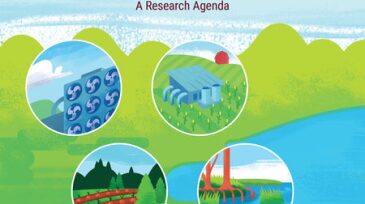
 Some of these technologies can be deployed now, but additional ones are needed to meet climate goals.
 -
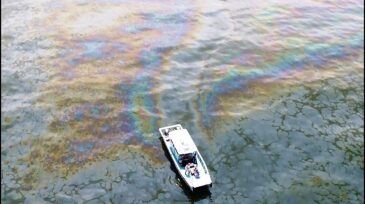
Engineers from the Monterey Bay Aquarium Research Institute have demonstrated a new use for the institute's long-range autonomous underwater vehicles—detecting and tracking oil spills.
-
Remotely measuring the activity of extractive industries in conflict-affected areas that do not have reliable administrative data can support a broad range of public policy and decisions and military operations.
-
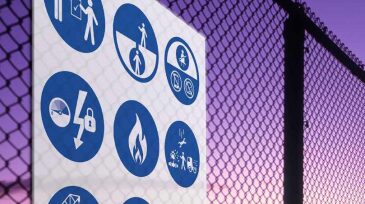
The International Association of Oil and Gas Producers has updated its set of Life-Saving Rules to simplify and improve them. The organization’s Report 459 now lists nine rules designed to protect workers in the oil and gas industry from fatalities.
-
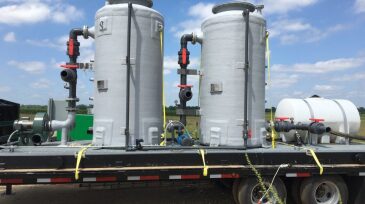
Biological-based emissions control has promising advantages such as the potential for a low carbon footprint, low secondary pollutants such as NOx and SOx, lower energy demands, and lower cost.
-
KBC, a Yokogawa company, announced the launch of a new Energy and Sustainability Co-Pilot hub in Singapore to address the Singapore government’s environmental sustainability initiatives.
-
An oil spill that has been quietly leaking millions of barrels into the Gulf of Mexico has gone unplugged for so long that it now verges on becoming one of the worst offshore disasters in US history.
-
The Advanced REACH Tool is a mechanistic higher-tier model to estimate inhalation exposure to chemicals using a Bayesian approach. This paper provides a discussion of the key modifying factors that should be considered to extend the model to include welding fume exposure.
-
Proposed changes would modify EPA's August 2016 final rule, "Oil and Natural Gas Sector: Emission Standards for New, Reconstructed, and Modified Sources." The proposal has been submitted for publication to the Federal Register. Following that publication, the EPA will accept comments for 60 days.
-
Fifteen members of the UN’s International Maritime Organization have voted to approve amendments to existing codes on diver safety intended to harmonize the codes “with current industry practice.”