HSE & Sustainability

The AI revolution isn't just digital. This article examines how geology underpins the convergence of AI, energy, carbon management, and the infrastructure powering frontier LLMs.

Winners of Alberta's Drilling Technology Challenge cover a range of technologies from robotics to enhance drilling rig safety to AI-enabled energy management, downhole sensing, well navigation, hybrid power systems, and geothermal energy.

Located along the North Sea, the Humber is expected to play a central role in the UK’s effort to achieve a net-zero emissions status by 2050.
-
Initiative 97 would require oil and gas wells to be at least 2,500 ft away from homes and schools.
-
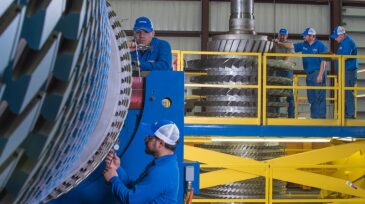
 Sulzer’s Houston Service Center has passed a major milestone in its safety record, operating for more than 3 years without a lost-time incident (LTI).
 -
The Sea Grant oil spill outreach team has produced two new publications explaining what scientists know about what happens to oil in a marine environment after an accidental spill.
-
Effective Prevention of Tuberculosis Transmission in Oil and Gas Workplaces: A Programmatic ApproachIntegrating a tuberculosis (TB) control program into existing operation systems has provided a sustained approach for effective and efficient prevention of TB transmission in the workplace.
-
This paper presents a scientific method for reducing fatigue risks in oil and gas organizations that operate a slowly rotating shift schedule.
-
Getting to Zero and Beyond: The Path Forward, sets the stage for continuing the discussion across the industry of the essential steps the industry must take to sustain zero harm.
-
Relationships and engagement with communities in direct areas of influence is of paramount importance for successful exploration and production (E&P) operations.
-
This paper presents an analysis of the environmental aspects of the exploitation of unconventional reservoirs in order to evaluate the risk of the activity.
-
This paper examines the use of injury rates as a key performance indicator (KPI). It argues that, as a KPI, injury-frequency rate is no longer a valid measure.</p>
-
As operators seek lower water management costs, a pair of studies examines methods and technologies that could have a major impact on treatment and reuse for hydraulic fracturing operations and beyond.