HSE & Sustainability

The AI revolution isn't just digital. This article examines how geology underpins the convergence of AI, energy, carbon management, and the infrastructure powering frontier LLMs.

Winners of Alberta's Drilling Technology Challenge cover a range of technologies from robotics to enhance drilling rig safety to AI-enabled energy management, downhole sensing, well navigation, hybrid power systems, and geothermal energy.

Located along the North Sea, the Humber is expected to play a central role in the UK’s effort to achieve a net-zero emissions status by 2050.
-
The Trump administration is considering easing offshore oil and gas safety regulations, including eliminating certain requirements for Arctic drilling , and cutting testing requirements for rules developed in response to BP's Deepwater Horizon disaster, an Interior Department document showed.
-
 Public perceptions matter. The industry needs to take a proactive and solution-centric position with respect to the Paris Agreement and join the battle for the clean and affordable kilowatts of energy the markets will increasingly favor.
 -
With the API and a multi-operator group passing separate programs aimed at reducing methane emissions, the discussions on what defines an acceptable level of regulation continues within the industry.
-
On 23 May 2017,the Ukrainian parliament adopted the Law of Ukraine "On Environment Impact Assessment." The newly adopted law requires mandatory assessment of effect on the environment of certain industrial objects and activities.
-
Inventys is receiving $2.6 million from Natural Resources Canada through its Energy Innovation Program to support the development of a 30-tonne-per-day carbon-dioxide-capture pilot plant at Husky Energy’s Pikes Peak South Lloyd thermal project.
-
Environmental Protection Agency Administrator Scott Pruitt said in his first testimony before Congress on 7 December that he plans to replace the Obama-era Clean Power Plan, instead of just killing it outright.
-
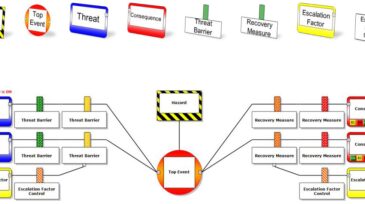
This paper describes an approach to standardizing proactive incident investigation to failed or impaired barriers and risk management.
-
Between 2005 and 2015, energy-related carbon dioxide emissions decreased in 43 states (including the District of Columbia) and increased in 8 states. On a per capita basis, energy-related carbon dioxide emissions decreased in 49 states (including the District of Columbia) and increased in 2 states.
-
US Secretary of Energy Rick Perry and Khalid Al Falih, Saudi minister of energy, industry, and mineral resources, signed a memorandum of understanding to establish a framework for mutually beneficial cooperation in the area of clean fossil fuels and carbon management.
-
At the 2013 G8 leaders’ summit in Northern Ireland, Canada announced that it would take action to enhance the transparency of payments to governments made by Canadian extractive companies by introducing mandatory reporting. The resulting legislation came into force on 1 June 2015.