HSE & Sustainability

The AI revolution isn't just digital. This article examines how geology underpins the convergence of AI, energy, carbon management, and the infrastructure powering frontier LLMs.

Winners of Alberta's Drilling Technology Challenge cover a range of technologies from robotics to enhance drilling rig safety to AI-enabled energy management, downhole sensing, well navigation, hybrid power systems, and geothermal energy.

Located along the North Sea, the Humber is expected to play a central role in the UK’s effort to achieve a net-zero emissions status by 2050.
-
 The demand for water and disposal services in the Permian Basin has piqued the interest—and investments—of companies eager to acquire existing pipeline infrastructure and saltwater disposal facilities to capitalize on the growing need.
 -
ExxonMobil announced an enhanced program to reduce methane emissions from its production and midstream facilities across the US. The program includes a commitment to switch out more than 1,000 high-bleed pneumatic devices over 3 years.
-
Safety risks of drilling operations are widespread, with potentially significant consequences. Managing these safety risks is key, and intelligent safety risk software can help.
-
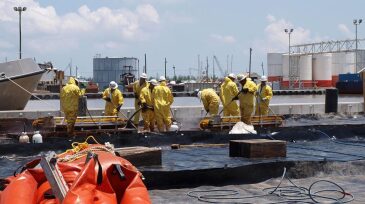
Workers who were likely exposed to dispersants while cleaning up the 2010 Deepwater Horizon oil spill experienced a range of health symptoms including cough and wheeze and skin and eye irritation, according to scientists at the National Institutes of Health (NIH).
-
The Pipeline and Hazardous Materials Safety Administration (PHMSA) is cracking down on smaller violations in the crude oil, petroleum, and hazardous liquid industries to combat a slow rise in the number of pipeline accidents.
-
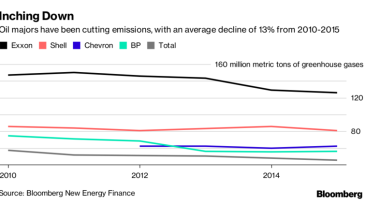
It’s no secret that oil majors are among the biggest corporate emitters of pollution. What may be surprising is that they’re reducing their greenhouse-gas footprints every year, actively participating in a trend that’s swept up most corporate behemoths.
-
Getting rid of wastewater from onshore wells has become an increasingly costly problem for oil producers as US crude output surged in recent years, especially in the new shale fields from Texas to North Dakota.
-
The results of a virtual reality (VR) safety simulator and gaming experience presented by Lloyd’s Register at SPE Offshore Europe suggest that more needs to be done in training and understanding the daily risks of oil rig maintenance and operation.
-
Onshore and offshore production in Texas and the Gulf of Mexico continues to recover to pre-Hurricane Harvey levels as inspections and assessments of damages are done. Operators have not reported major damages resulting in extended shut-ins.
-
The Mexican government continues to update its environmental regulations as authorities prepare for the first exploration and production (E&P) auction to feature blocks with unconventional oil and natural gas resources.