HSE & Sustainability

The authors propose a deep-learning-based approach enabling near-real-time CO2-plume visualization and rapid data assimilation incorporating multiple geological realizations for predicting future CO2 plume evolution and area-of-review determination.

This paper describes the operator’s initiative to reduce greenhouse-gas emissions and recover additional hydrocarbon, monetizing it as sales gas, by integrating upstream and downstream gas facilities in a unified approach.

The chair of the SPE Georgetown Section outlines how balanced, apolitical dialogue can support development amid rapid energy expansion.
-
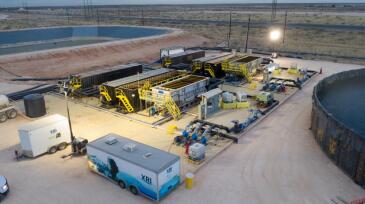
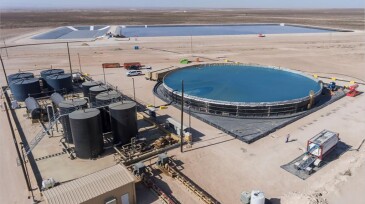
 The Evolution Pipeline System will help to mitigate Permian Basin seismicity through produced water recycling and diversion of produced water from areas of high seismicity.
 -
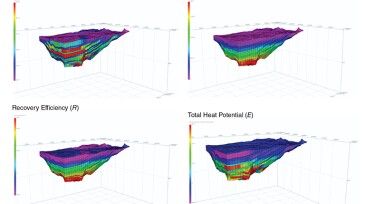
The authors of this paper discuss an integrated cloud-based work flow aimed at evaluating the cost-effectiveness of adopting geothermal production in low- to medium-enthalpy systems.
-
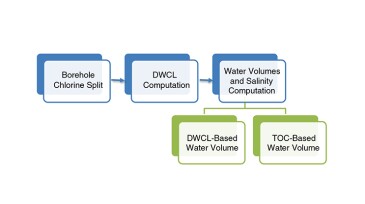
This paper provides a work flow based on research in two methodologies to estimate formation-water salinity, enhancing the quality of saturation evaluation for quick decision-making during logging operations.
-
This paper presents field cases of a rigless wireline logging technique that accurately locates sources of water production in cased wells with standalone sand screens in an offshore field in the Caspian Sea.
-
This paper presents case studies of how produced-water salinity data was used to transform the performance of two oil-producing fields in Nigeria.
-
The three papers chosen for publication share different approaches to chemically managing high-salinity produced water through commercially viable approaches. The identification of processes to treat high salinity levels and the approaches to alter and control the process make the papers not only good for discussion but also practical for all players, big and small.
-
The produced water conundrum in the Permian Basin will be solved by a mix of recycling, disposal, and future breakthroughs in technology currently being studied.
-
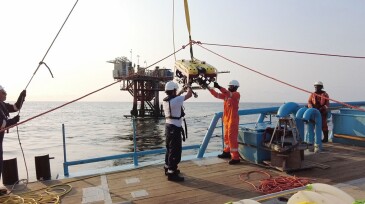
The Seaeye Falcon underwater robot is being used in the decommissioning and repurposing of an oil rig offshore Angola.
-
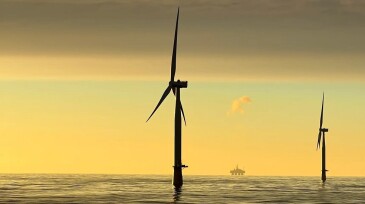
The power from the first turbine to come online will be used to help run the Gullfaks A platform in the North Sea. Seven of the 11 turbines in the field are expected to begin producing power within a year.
-
The new listing aims to prevent further loss of habitat for the flamboyant, stocky birds, which have drastically dwindled in population.