HSE & Sustainability

This paper proposes a shift in the timing of risk modeling to much further back within the job life cycle, recognizing each function’s role in the mitigation of risk.
This article from the SPE Methane Technical Section features Arvind Ravikumar of the University of Texas at Austin and focuses on how the Energy Emissions Modeling and Data Lab is integrating satellite observations, facility-level measurements, operational data, and emissions inventories into more credible methane accounting for oil and gas systems.

The firm’s latest analysis puts the bulk of the blame on a fragmented supply chain.
-
 While ESG is perceived by some to be—and can be—difficult to implement, and it may seem like a profit-killer, the irony is that, for most companies that implement ESG programs, including those within the oil and gas industry, it has the opposite effect.
 -
In a move with potential implications for oil, natural gas, and electric infrastructure, the US Interior Department said on 29 September that it will tighten restrictions protecting migrating birds earlier weakened by the Trump administration.
-
The backers of some of the first offshore hydrogen projects have little hope of turning a profit. The big question is, will anyone?
-
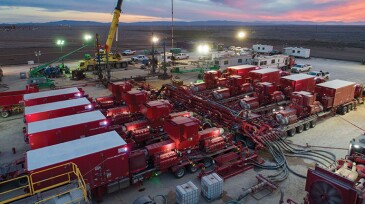
Electric-powered fracturing fleets looked impressively resilient in 2020 amid what was otherwise a significant collapse for the hydraulic fracturing sector. Today, the situation is more complicated.
-
Two Houston-based blockchain technology companies—Data Gumbo and Topl—are collaborating to help corporations report timely and accurate environmental, social, and governance (ESG) data, including performance and proof of progress on metrics, while protecting sensitive data.
-
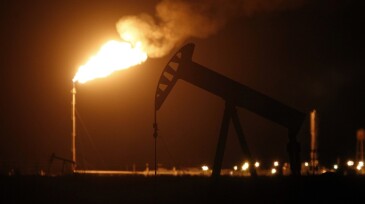
As the Texas Railroad Commission shortens the flaring window for a Permian well, a commissioner says alternatives should be sought to avoid waste.
-
Italian oil major Eni has developed a tool with the aim of determining the level of safety knowledge and competencies of all supervisory personnel, thus identifying all safety areas that might need a specific, customized, and effective training approach that could fill competency gaps and strengthen safety supervision at work sites.
-
The Oil and Gas Climate Initiative has reduced its collective upstream methane and carbon intensity targets for 2025. Together, the revisions to these targets would bring an additional reduction of around 50 million tonnes of CO2 equivalent per year.
-
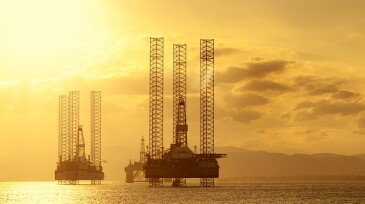
Aquaterra Energy, Lhyfe, and Borr Drilling have formed a partnership to pioneer a concept of producing hydrogen using a converted jackup rig in the North Sea.
-
Organizers of the Oil & Gas Authority’s decarbonization competition are looking for ideas to bring electrification and an integrated energy basin closer to reality.