HSE & Sustainability

LibertyStream has signed a feedstock agreement with Goodnight Midstream to support its first commercial lithium carbonate facility in North Dakota's Bakken, advancing plans to extract battery-grade lithium from produced water.

The transition away from materials that contain per- and polyfluoroalkyl substances (PFAS), co-called forever chemicals, creates an opportunity to preserve historical information. Information that appears to have little operational value today may later become important when organizations need to evaluate past PFAS use. Once that information is lost, recreating it may…

TotalEnergies signed off for 30% operated stakes in the Lang Lebah and B14 gas fields offshore Sarawak on the sidelines of ADIPEC in Abu Dhabi, while also highlighting methane-reduction partnerships in Angola, India, and Southeast Asia.
-
 Local officials are calling on Massachusetts Gov. Charlie Baker to require studies of health and safety risks before approving new natural-gas infrastructure. In separate letters, boards of health representing 100 communities raise concerns about the state's reliance on natural gas as a fuel source.
-
About a third of claims for medical or sickness benefits are related to mental health issues, often resulting from stress. And with the oil sector downturn, mental health claims have increased, a director of an Aberdeen-based financial advisory firm said.
-
The Israeli company has developed augmented-reality solutions that enable field technicians in energy and other industries to avert disasters such as BP's Gulf of Mexico oil spill.
-
A new federal study estimates that, each day, about 380 to 4,500 gal of oil are flowing at the site where a company's oil platform was damaged after a hurricane. That's about a hundred to a thousand times worse than the company's initial estimate.
-
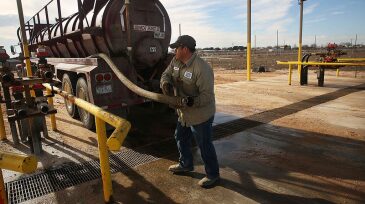
As Permian production ramps up and saltwater disposal well capacity is pushed to its limit, companies see a need to develop collaborative, commercially viable methods of handling produced-water volumes. If reuse remains at its current rate of only 15%, operators could face a $30-billion tab.
-
In recent years, some effort has been made to use EOR techniques, particularly CO2 injection, to extract additional oil and gas from unconventional resources. This has the potential to change the dynamics (again) of oil production from these tight and difficult reservoirs.
-
The biennial SPE Offshore Europe conference will explore a diverse set of topics, including the application of digital technologies and preparing for a low-carbon energy future and ongoing work around standardization and decommissioning.
-
The SPE Strategic Plan 2018–2023 calls for claiming pride in our industry’s higher purpose, that of supplying energy to meet the needs of humanity.
-
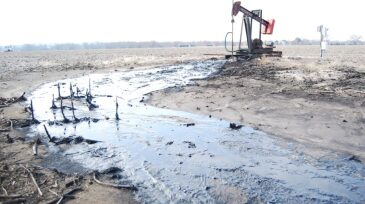
The number of deserted oil and gas wells in Kansas blossomed during the past 5 years to 22,000. A Kansas Corporation Commission annual report revealed a fund created in 1996 to finance plugging of wells to be inadequate if the objective was to keep pace with demand for plugging.
-
The well count and completion intensity of US tight oil and gas operations have grown in recent years, and rising pressure from environmental regulations means that produced water management has become a key focus for operators.