HSE & Sustainability

Modeling solubility trapping at reservoir scale remains a key challenge for carbon storage projects. This study introduces a novel sub-grid convective mixing model, implemented in the Open Porous Media Flow simulator and applied to the SPE11 benchmark, that enables accurate prediction of carbon dioxide dissolution trapping in geological storage using computationally e…

SPE’s newly renamed Safety Technical Section expands the reach of human factors by integrating safety, risk management, and system resilience expertise while preserving dedicated leadership and technical focus.

As drilling operations become increasingly digital, computer vision is emerging as a continuous safety layer that complements, not replaces, established safety practices. The challenge is no longer whether artificial intelligence can detect hazards, but how operators should deploy, integrate, and govern these systems to improve safety without adding operational comple…
-
 The contractor will deliver a similar carbon dioxide injection system to the one it completed for phase one in 2023.
 -
The Carbon Capture, Utilization, and Storage (CCUS) Technical Section is proud to announce the launch of its new eMentoring Program forward-thinking initiative designed to connect young professionals with seasoned experts across the CCUS industry. This virtual mentorship effort aims to fast-track knowledge transfer, foster professional development, and build a stronge…
-
Fawaz Bitar, BP's senior vice president for HSE and carbon, spoke at a recent health, safety, and environment conference in Aberdeen about the importance of health in the industry. Here is a transcript of his speech.
-
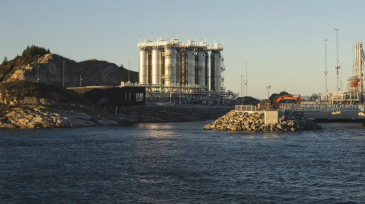
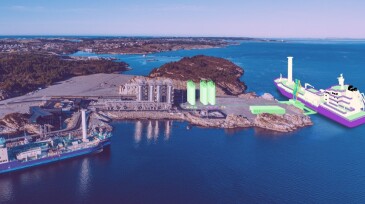
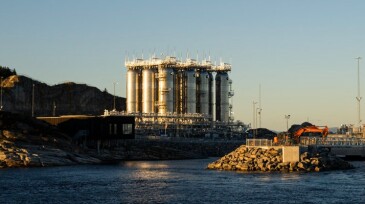
The Norwegian Ministry of Energy has approved the Phase 2 expansion, which is expected to increase carbon dioxide storage capacity from 1.5 million tonnes to 5 million tonnes.
-
The journey to safety excellence is not paved with quick fixes but with deliberate, data-informed strategies.
-
DNV’s carbon capture and storage outlook forecasts a massive shortfall in the projects necessary to help the world reach net-zero emissions by 2050.
-
Nigeria’s Petroleum Industry Act 2021, a Pathway for Economic Prosperity and Sustainable DevelopmentThis paper presents a comprehensive review of the updated regulatory structures, general administration, and functions of regulators to provide a clear focus for industry stakeholders.
-
Buoy-based camera footage, analyzed by artificial intelligence, can help reduce the risk of birds colliding with offshore wind farm turbines.
-
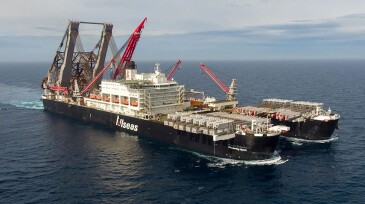
The Dutch marine contractor says it plans to outfit its construction vessels with small modular reactors over 5 years.
-
Artificial intelligence is transforming how organizations enhance safety performance and build a strong culture of safety excellence.