HSE & Sustainability

This article addresses the challenges of managing water-soluble organics (WSOs) in offshore produced water. It provides a brief discussion of the chemistry, along with strategies and technologies that can be used to manage WSO levels in produced water, thus facilitating compliance with regulatory overboard water-quality guidelines.

Spain has granted permits covering a swath of the mountain range to Mantle8 for natural hydrogen and helium exploration a month after France granted the company similar permits.

Crude benchmarks spiked amid concerns that the US-Iran ceasefire is collapsing as commercial shipping comes under renewed attack.
-
 The memorandum on integrated and unified risk management in the petroleum industry aims to help companies continue developing their own activities in this area.
 -
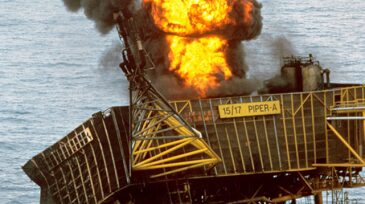
The major accident of 6 July 1988, when Britain’s Piper Alpha facility caught fire and exploded, remains one of the worst imaginable scenarios for everyone working in and with the petroleum industry. Its lessons are still relevant.
-
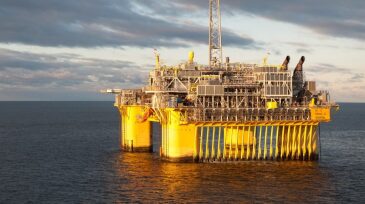
By transitioning from gas turbines to land-based electrical power for various platforms, the company hopes to reduce carbon dioxide emissions by more than 600,000 tonnes/year.
-
To better protect workers exposed to respirable crystalline silica, OSHA has issued two new standards: one for construction and another for general industry and maritime. OSHA will begin enforcing most provisions of the standard for general industry and maritime on 23 June.
-
Broadening training to include nontechnical skills can enhance safety and operational performance in a team environment, particularly when decisions crucial to preventing or mitigating a major incident must be taken against the background of an environment that is constantly changing.
-
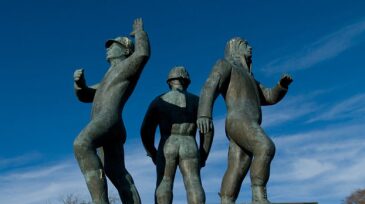
The Piper Alpha incident in the UK North Sea had a profound impact on the development of process safety culture and legislation around the world. With the great crew change already taking place, this column reflects on the disaster to ensure that its lessons are not forgotten.
-
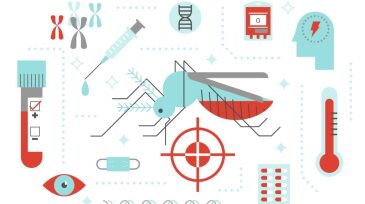
Malaria prevention is critical for multinational companies that operate in areas with a high risk of the disease. A global company has an established workplace malaria-control program that uses awareness, bite prevention, chemoprophylaxis, and early diagnosis to protect the health of workers.
-
The Vatican was host to executives of the world’s top oil companies for a conference on climate change and the transition away from fossil fuels on 9 June.
-
SPE Board of Directors member Johana Dunlop speaks on the importance of SPE in advancing the area of health, safety, environment, and, increasingly, sustainability. Watch the interview here.
-
The company-centric stakeholder model belongs to the time when an oil company had to communicate its good intentions and demonstrate it was also executing them. But the world continues to change. Society nowadays expects business to take on more responsibility than that.