HSE & Sustainability

LibertyStream has signed a feedstock agreement with Goodnight Midstream to support its first commercial lithium carbonate facility in North Dakota's Bakken, advancing plans to extract battery-grade lithium from produced water.

The transition away from materials that contain per- and polyfluoroalkyl substances (PFAS), co-called forever chemicals, creates an opportunity to preserve historical information. Information that appears to have little operational value today may later become important when organizations need to evaluate past PFAS use. Once that information is lost, recreating it may…

TotalEnergies signed off for 30% operated stakes in the Lang Lebah and B14 gas fields offshore Sarawak on the sidelines of ADIPEC in Abu Dhabi, while also highlighting methane-reduction partnerships in Angola, India, and Southeast Asia.
-
 A survey of more than 100 leaders in hazardous industries suggests that oil price has had a moderate or significant effect on process safety risk, characterized by major job cuts, loss of corporate memory, cost-cutting, and overall belt-tightening brought on by the downturn.
-
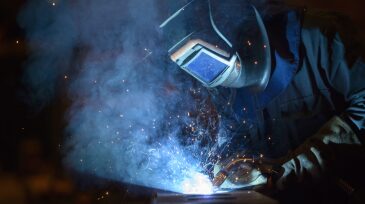
Increasing evidence suggests that welding-fume exposure is associated with systemic inflammation.
-
The US Environmental Protection Agency is conducting a study that will take a holistic look at how the agency, states, tribes, and stakeholders regulate and manage wastewater from the oil and gas industry.
-
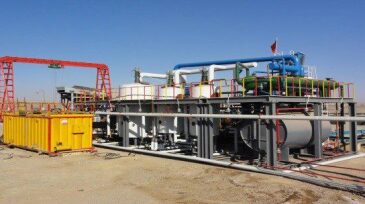
With the use of many advanced technologies, the Keshen gas field in western China was developed efficiently with no injuries and no pollution to the environment. It also significantly boosted local community development.
-
Accidental detonation of a perforating gun at surface can have catastrophic consequences. To decrease risks, layers of procedural controls have been implemented to reduce the inadvertent application of power caused by human error, stray voltage, or the presence of radio frequency (RF) energy.
-
The recently issued SPE technical report Getting to Zero and Beyond: The Path Forward highlights the “how to” for the industry to achieve zero incidents, zero harm, and zero impact.
-
Oil-producing countries are adopting a variety of strategies to shield their industries from climate action, seeking not just to survive but to recast their businesses in ways that provide competitive advantages, according to a paper by an expert at the Center for Energy Studies at Rice University.
-
In the dry, dusty plains of West Texas, home to America’s most prolific oil play, the problem isn’t too little water. It’s too much.
-
DNV GL has published a paper to support the safe use of artificial intelligence. The paper asserts that data-driven models alone may not be sufficient to ensure safety and calls for a combination of data and causal models to mitigate risk.
-
Though many people understand that employers have workplace responsibilities regarding their employees' health and safety, far fewer understand that the employees also have certain legal obligations they must meet.