HSE & Sustainability

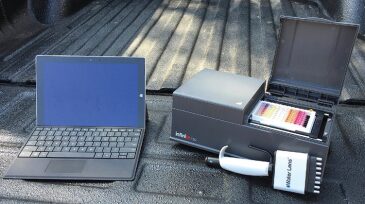
This article addresses the challenges of managing water-soluble organics (WSOs) in offshore produced water. It provides a brief discussion of the chemistry, along with strategies and technologies that can be used to manage WSO levels in produced water, thus facilitating compliance with regulatory overboard water-quality guidelines.

Spain has granted permits covering a swath of the mountain range to Mantle8 for natural hydrogen and helium exploration a month after France granted the company similar permits.

Crude benchmarks spiked amid concerns that the US-Iran ceasefire is collapsing as commercial shipping comes under renewed attack.
-
 Analyzing the properties of produced water is a difficult process because of the extreme levels of suspended and dissolved particulates contained in it, and a chemistry profile that is in constant flux.
 -
The presence of excessive levels of organic components in produced water can lead to costly problems for operators ranging from clogged membranes in treatment facilities to environmental issues and compliance with government permits.
-
Smart waterflooding by tuning injection-water salinity and ionic composition has gained attention in recent years. In this study, desalination technologies are reviewed with the objective to develop potential water-treatment solutions that can most efficiently alter injection-water chemistry.
-
A look at a water management plan for developing shale assets in the Permian Basin encompassing the full life cycle of each field.
-
Studies show that almost 65% of megaprojects fail to meet the performance goals established when the financial go-ahead was given. Operators can avoid costly pitfalls if they focus on addressing the human-related problems.
-
Waste injection in shale has been performed on the Norwegian Continental Shelf (NCS) for more than 15 years. Techniques have been developed that allow wells to dispose of several million barrels into individual shale domains with matrix permeability in the nanodarcy range and no permeable layers.
-
Past experiences with problematic situations often drive the decision-making process, and while experience may be helpful, it can also lead to the development of biases that hamper an organization’s ability to manage dynamic environments such as unconventional projects.
-
The compact nature of offshore platforms makes the management of the exhaust from engines a concern from a health and safety standpoint. In this paper, the authors present a typical plume-impingement problem aboard an offshore platform and discuss the application of plume-cooling technology.
-
Helicopter operations are important in the offshore industry but accidents involving them can have fatal consequences. This paper focuses on risk mitigation during the loading/unloading task of a slickline/wireline job from various viewpoints, including the psychological aspects of the crew.
-
Virtual reality technology has become a powerful training tool for companies looking to recreate real-life, on-the-job oil industry scenarios.