HSE & Sustainability

This article addresses the challenges of managing water-soluble organics (WSOs) in offshore produced water. It provides a brief discussion of the chemistry, along with strategies and technologies that can be used to manage WSO levels in produced water, thus facilitating compliance with regulatory overboard water-quality guidelines.

Spain has granted permits covering a swath of the mountain range to Mantle8 for natural hydrogen and helium exploration a month after France granted the company similar permits.

Crude benchmarks spiked amid concerns that the US-Iran ceasefire is collapsing as commercial shipping comes under renewed attack.
-
 Awareness of the different styles of thinking can provide an understanding of the choices people make when assessing risk and making decisions. The purpose of this paper is to show how such knowledge can be operationalized and applied to real-world oil and gas operations.
 -
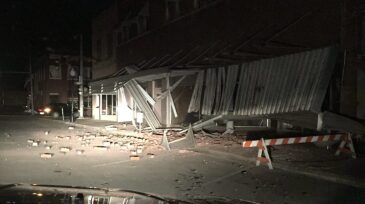
Earthquake in Cushing, OK -- home to the largest oil storage facility in the world -- leads to further regulatory action on disposal wells in the area.
-
As governments around the world seek to lower energy consumption in the wake of the low oil price environment, the 2016 SPE President said the industry must be proactive in ramping up its sustainability efforts.
-
The US shale sector has proudly touted the fact that it has helped reduce the nation’s carbon dioxide output to an 18-year low by producing the natural gas that is displacing coal use in power generation. But government regulators appear to want even more.
-
The report was written by a steering committee of SMEs with industry input from an SPE summit as well as members from SPE online communities. It is based on discussions and conclusions from the summit and is intended to provide guidance on an industry-wide safety management data sharing program.
-
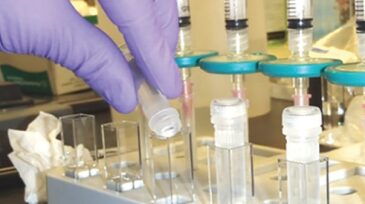
Three metrics that are used for monitoring organics in water are total organic carbon (TOC), chemical oxygen demand, and biological oxygen demand. While less commonly used than the other two methods, TOC can offer practical advantages to operators.
-
In a quiet industrial park in suburban Toronto, there is a machine that eats carbon dioxide (CO2) and spits out fuel. A world away, at a world-class research institute in Bangalore, India, engineers have developed a completely different technology to convert CO2 into industrial chemicals.
-
Treating produced water to control bacteria is like weeding a garden. It addresses the problem that is not going away.
-
A floating gas-extraction facility was constructed to extract gas-laden water, separate the CH4 and some of the CO2, and reinject the degassed water, thus increasing the safety of the lake and simultaneously providing CH4.
-
The engineering and operational planning to ensure that no uncontrolled hydrocarbon releases occur during the execution of subsea big-bore gas wells are described.