HSE & Sustainability

LibertyStream has signed a feedstock agreement with Goodnight Midstream to support its first commercial lithium carbonate facility in North Dakota's Bakken, advancing plans to extract battery-grade lithium from produced water.

The transition away from materials that contain per- and polyfluoroalkyl substances (PFAS), co-called forever chemicals, creates an opportunity to preserve historical information. Information that appears to have little operational value today may later become important when organizations need to evaluate past PFAS use. Once that information is lost, recreating it may…

TotalEnergies signed off for 30% operated stakes in the Lang Lebah and B14 gas fields offshore Sarawak on the sidelines of ADIPEC in Abu Dhabi, while also highlighting methane-reduction partnerships in Angola, India, and Southeast Asia.
-
 A lack of sleep and excessive lighting in the workplace can have negative long-term health effects for industrial shift workers.
-
In September, a technical workshop was held on the topic of injection-induced seismicity in Banff, Canada. It brought together industry and technical experts to discuss the increasingly important topic of induced seismicity associated with various injections during oil and gas activities.
-
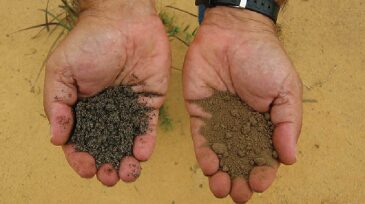
In the northeastern desert of Utah, a new type of oil sands extraction technology has been born. The company behind it claims the process is the most cost-effective and environmentally sound way to develop oil sands.
-
From 2009 to 2010, there was an increase in the number of well-control incidents on the Norwegian continental shelf reported to the Petroleum Safety Authority Norway (PSA).
-
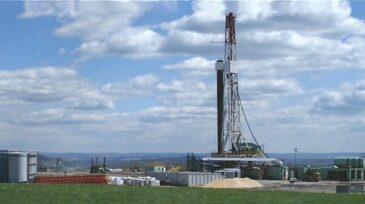
The rapid development of shale formations over the past decade has led the United States to become the world’s undisputed leader in natural gas production.
-
The paper presents and discusses a solution for immersive training of industrial operators that allows experiencing the multifaceted scenarios of real-plant operations.
-
This paper describes functional water-treatment steps that target the most common removal of suspended solids and oil or condensate from Produced-water (PW) and flowback-water (FW) for recycling or disposal operations.
-
The Piceance basin in western Colorado is a long-term play expected to produce for another 20 years or more.
-
The demands for fresh water used in hydraulic-fracturing operations are placing constraints on water resources in some regions of the United States. Along with higher acquisition costs for fresh water, produced-water-disposal costs also have increased.
-
This paper presents the results of a laboratory investigation in which treatment processes were evaluated as treatment methods for produced water (PW) from different oil and gas fields.