HSE & Sustainability

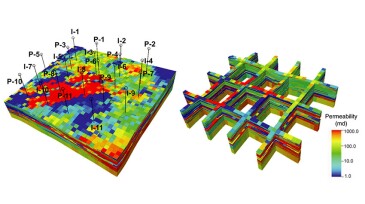
Modeling solubility trapping at reservoir scale remains a key challenge for carbon storage projects. This study introduces a novel sub-grid convective mixing model, implemented in the Open Porous Media Flow simulator and applied to the SPE11 benchmark, that enables accurate prediction of carbon dioxide dissolution trapping in geological storage using computationally e…

SPE’s newly renamed Safety Technical Section expands the reach of human factors by integrating safety, risk management, and system resilience expertise while preserving dedicated leadership and technical focus.

As drilling operations become increasingly digital, computer vision is emerging as a continuous safety layer that complements, not replaces, established safety practices. The challenge is no longer whether artificial intelligence can detect hazards, but how operators should deploy, integrate, and govern these systems to improve safety without adding operational comple…
-
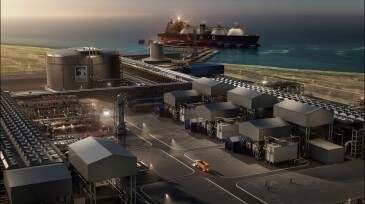
 Ruwais is slated to be the first net-zero LNG facility in the Middle East and North Africa.
 -
The modular facility will process associated gas to produce electricity for up to 200,000 households in the Basra region.
-
As Southeast Asia’s third-largest gas producer, PTTEP is investing in its energy security by prioritizing gas production and building up a global LNG supply chain.
-
The decision invokes a 1953 law that will make it difficult for incoming US President Donald Trump to reverse.
-
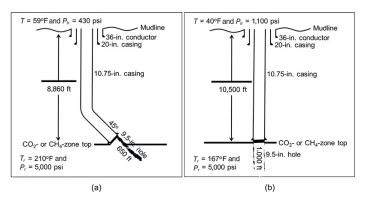
In this paper, a dynamic multiphase-flow simulator is used to evaluate the effectiveness and suitability of using a subsea capping stack to respond to a CO₂ well blowout.
-
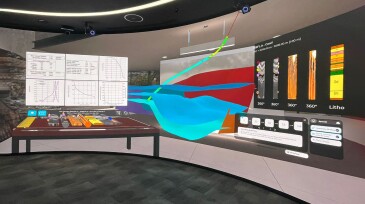
Virtual reality and related visualization technologies are helping reshape how the industry views 3D data, makes decisions, and trains personnel.
-
The objective of this paper is to outline the importance of new standards for studying hydraulic sealability of barrier materials, with an emphasis on interface analysis.
-
The oil and gas industry must balance global energy demands with stricter environmental regulations, particularly in drilling, where risks and complexities are higher. Innovative technologies, like those used in this stuck-pipe scenario offshore Azerbaijan, are key to overcoming these challenges and improving safety, speed, and efficiency.
-
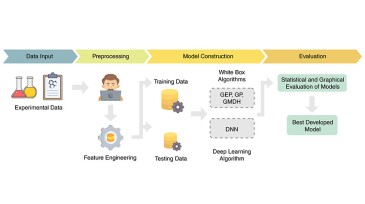
The objective of this study is to develop an explainable data-driven method using five different methods to create a model using a multidimensional data set with more than 700 rows of data for predicting minimum miscibility pressure.
-
The authors of this paper propose hybrid models, combining machine learning and a physics-based approach, for rapid production forecasting and reservoir-connectivity characterization using routine injection or production and pressure data.