HSE & Sustainability

Modeling solubility trapping at reservoir scale remains a key challenge for carbon storage projects. This study introduces a novel sub-grid convective mixing model, implemented in the Open Porous Media Flow simulator and applied to the SPE11 benchmark, that enables accurate prediction of carbon dioxide dissolution trapping in geological storage using computationally e…

SPE’s newly renamed Safety Technical Section expands the reach of human factors by integrating safety, risk management, and system resilience expertise while preserving dedicated leadership and technical focus.

As drilling operations become increasingly digital, computer vision is emerging as a continuous safety layer that complements, not replaces, established safety practices. The challenge is no longer whether artificial intelligence can detect hazards, but how operators should deploy, integrate, and govern these systems to improve safety without adding operational comple…
-
 Australia’s Ichthys LNG facility will provide feedstock, along with production from legacy Japanese gas fields that will also serve as repositories for CO2 storage.
 -
Texas regulators are taking public comment about how they should implement an EPA rule to reduce methane leaks from the oil and gas industry.
-
The institute is tasked with accelerating the deployment and scaling of cost-effective climate technology.
-
Ineos, the day-to-day operator of Greensand Future, with its partners Harbour Energy and Nordsøfonden, has made a final investment decision into the first commercial phase, with storage operations set to begin by early 2026.
-
This paper serves as a comprehensive overview of greenhouse-gas emission source data visibility in oil and gas production operations.
-
The acquisition will add water infrastructure in both the Midland Basin of west Texas and the Williston in North Dakota.
-
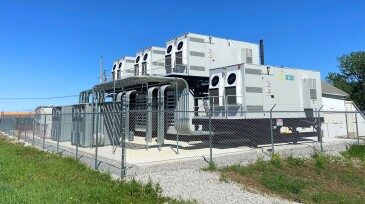
The drilling contractor is spending big to deploy natural-gas-powered microgrids and battery storage.
-
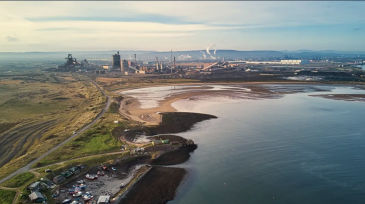
Permits for the East Side Cluster carbon storage project have been awarded, and participants have begun announcing final investment decisions.
-
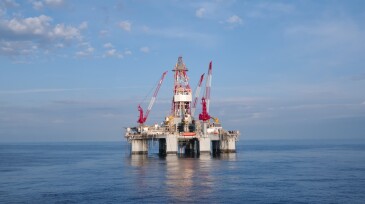
The environmental impact statement is a required step before another lease sale can be held in the Gulf of Mexico, a move welcomed by the oil and gas industry.
-
Undocumented orphaned wells pose hazards to both the environment and the climate. Scientists are building modern tools to help locate, assess, and pave the way for ultimately plugging these forgotten relics.