HSE & Sustainability
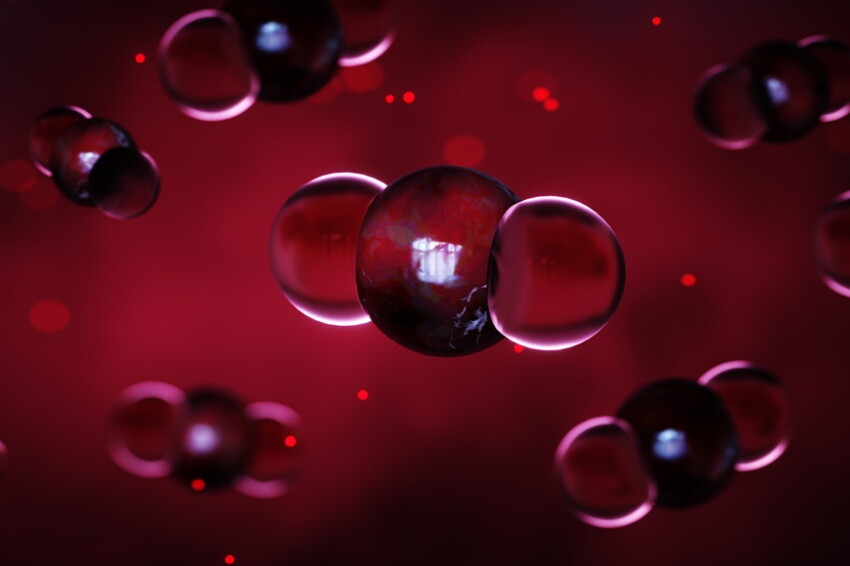
Modeling solubility trapping at reservoir scale remains a key challenge for carbon storage projects. This study introduces a novel sub-grid convective mixing model, implemented in the Open Porous Media Flow simulator and applied to the SPE11 benchmark, that enables accurate prediction of carbon dioxide dissolution trapping in geological storage using computationally e…

SPE’s newly renamed Safety Technical Section expands the reach of human factors by integrating safety, risk management, and system resilience expertise while preserving dedicated leadership and technical focus.

As drilling operations become increasingly digital, computer vision is emerging as a continuous safety layer that complements, not replaces, established safety practices. The challenge is no longer whether artificial intelligence can detect hazards, but how operators should deploy, integrate, and govern these systems to improve safety without adding operational comple…
-
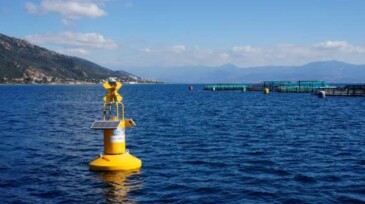
 The presence of marine mammals during offshore infrastructure work is a major environmental concern. To safeguard species and their natural habitats, more and more local legislation imposes a cap on sound levels from offshore activities.
 -
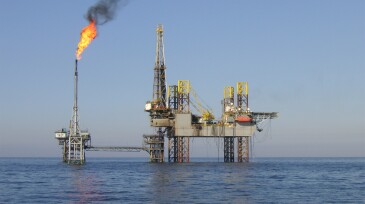
The increase in flaring emissions was led by operations in the Middle East, Africa, and Russia.
-
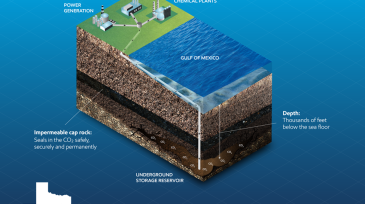
The $220-million carbon capture and storage project is one of the world's largest, with a nameplate injection capacity of 1.7 mtpa.
-
The agreement with state officials comes more than 3 years after the supermajor proposed building the world's largest carbon storage hub offshore the Houston area.
-
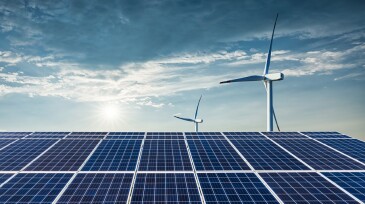
DNV’s Energy Transition Outlook 2024 projects continued growth in solar; slower growth in wind; and declines in coal, oil, and gas, while hydrogen and carbon capture projects are struggling.
-
Radioactive elements occur naturally at low levels in oil and gas basins. As oil and gas is extracted, these elements can accumulate in infrastructure. Now, scientists in Australia are investigating the toxicity of different radiation doses to marine organisms.
-
Occidental’s 1PointFive will receive up to $500 million from the Office of Clean Energy Demonstrations for the carbon-capture facility in south Texas.
-
The Ravenna CCS project will capture, transport, and store carbon-dioxide emissions from Eni’s natural gas treatment plant in Casalborsetti, Italy, estimated to be approximately 25,000 tonnes per year.
-
A study out of the University of Texas at Austin highlights the importance of realistic market thresholds, targeted activism, and the potential for certified markets to drive significant environmental improvements in the industry.
-
The new areawide safety plan is a collaboration with Vår Energi and is expected to begin on 1 January.