HSE & Sustainability

The firm’s latest analysis puts the bulk of the blame on a fragmented supply chain.

This paper reviews a proof-of-concept project in which surplus casing pipes were used in the fabrication of purposefully designed artificial reef structures for the enhancement of biodiversity and commercial fisheries.

This work describes a study in which distributed data parallel training, paired with a node-local caching pipeline, enabled efficient multigraphics-processing-unit scaling for a CO₂-storage graph-neural-network surrogate while maintaining generalization.
-
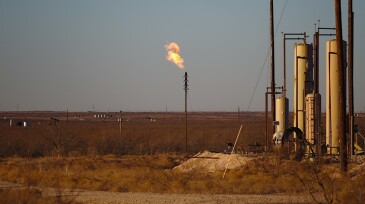
 Applications are open for the funding, which comes from the Inflation Reduction Act, for projects that help monitor, measure, quantify, and reduce methane emissions.
 -
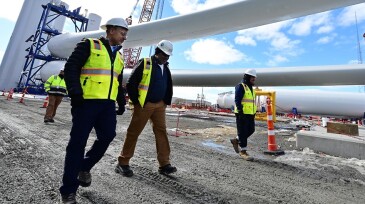
The Bureau of Safety and Environmental Enforcement (BSEE) recently conducted an inspection at the South Fork Wind project, the bureau’s first inspection of an operational offshore wind turbine in US waters.
-
This paper presents efforts to reduce greenhouse-gas emissions and increase energy efficiency through the use of a real-time monitoring tool on exploration and production operated assets.
-
The Permian’s produced-water challenge presents an opportunity for innovation to pave the way toward a more sustainable future for the industry.
-
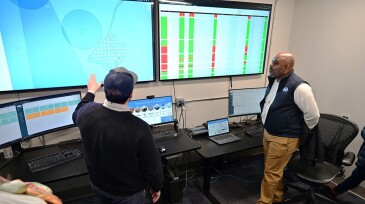
The exercise at Vineyard Wind’s Marine Coordination Center successfully evaluated Vineyard Wind’s ability to activate an incident management team and carry out the procedures in their approved oil spill response plans.
-
The objective of this study is to use expired medications as green corrosion inhibitors that can be used during stimulation treatments. Because the medications are expired and not fit for human consumption, the cost is inherently low.
-
A survey conducted by Unite the Union had 75% of respondents reply that they would never fly in an Airbus Super Puma helicopter amid safety concerns.
-
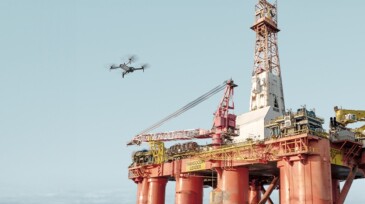
Using autonomous systems creates efficiencies, but, even more critically, it also allows engineers to be engineers.
-
This article explores the implementation of artificial intelligence vision for leak monitoring automation in the oil and gas industry and its role in improving safety standards, operational efficiency, and environmental performance.
-
An economic analysis of a wellbore methodology in natural gas fields that uses gasification of methane within the wellbore (not within the reservoir) for hydrogen production while incorporating simultaneous sequestration of carbon. This new methodology offers significant energy and cost savings in addition to zero carbon being produced to the surface.