LNG

TotalEnergies signed off for 30% operated stakes in the Lang Lebah and B14 gas fields offshore Sarawak on the sidelines of ADIPEC in Abu Dhabi, while also highlighting methane-reduction partnerships in Angola, India, and Southeast Asia.

New rules requiring Mozambique’s LNG industry to supply 25% of production to the domestic market could stabilize gas deliveries to South Africa’s Secunda industrial center as the Pande and Temane gas fields near depletion.

This paper presents the large-scale deployment and operational integration of an advanced, automated rheometer in the Ghawar gas field, one of the world’s most prolific and technically complex hydrocarbon developments.
-
 The French major will supply the Caribbean country with LNG supplies while agreeing to take supplies from future Texas project.
-
Stonepeak will pay $5.7 billion for 40% interest in the project due for FID later this year.
-
The strategic buyout of Portugal’s Galp is ADNOC’s first investment in Mozambique as it continues to grow its lower-carbon LNG portfolio.
-
Ginger is among the 10 upstream projects that BP plans to bring on-stream by 2027 after resetting its strategy to raise oil and gas investments to $10 billion per year.
-
US LNG exports to Asia rose from 3.1 Bcf/D in 2023 to 4 Bcf/D last year.
-
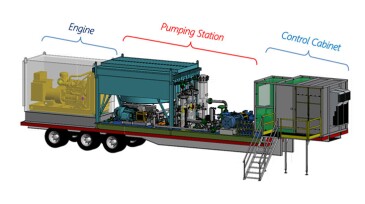
This article describes a technology combining a compression unit with a flexible line to offer a flaring alternative for transferring hydrocarbons.
-
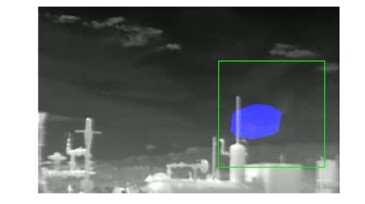
This paper describes a deep-learning image-processing model that uses videos captured by a specialized optical gas-imaging camera to detect natural gas leaks.
-
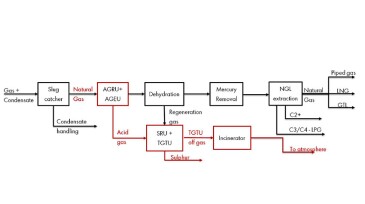
This paper aims to provide insights to address the challenge of identifying the optimal point within the gas-processing lineup for recovering a high-purity CO₂ stream suitable for sequestration.
-
Recently, artificial intelligence (AI), deep learning (DL), and machine learning (ML) have taken natural gas processing and handling on a new trajectory, replacing complex simulation runs.
-
In the next 3 to 5 years, South America and the Middle East will lead global investment, driven by greenfield developments, exploration, and midstream infrastructure. Brazil’s growth is fueled by deepwater pre-salt projects, while the Middle East focuses on gas and LNG, especially in Qatar, Saudi Arabia, and the UAE.