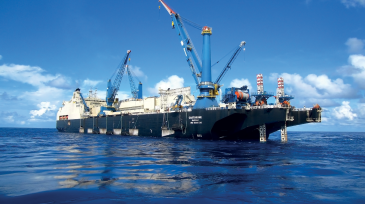
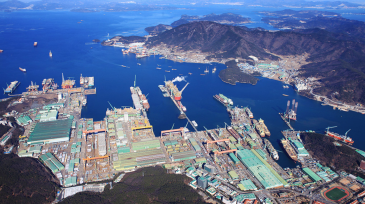
Asset Management

Superior seeks to expand its international footprint through the acquisition, which is reportedly valued at $1.2 billion.

By acquiring 100% of Ventura’s outstanding shares, SED Energy Holdings would scale its business into a combined $1 billion company backed by a $1.3 billion contract backlog focused on deepwater drilling, shallow-water tender rigs, and seismic acquisition.
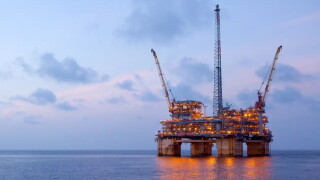
Shell is continuing to reshape its portfolio with the sale, which includes its interest in the BP-operated Na Kika platform and the Coulomb tieback.
-
 Saipem has launched offshore operations in Suriname, while Repsol is expanding exploration efforts in Venezuela and partnering with MOL Group and TPAO in the Mediterranean. Petronas, Shell, and Murphy Oil reported new discoveries in Suriname, Namibia, and Côte d’Ivoire, respectively, as Occidental acquired a stake offshore Trinidad and Tobago and BP began gas producti…
 -
The US federal government is working to stymie offshore wind power, but proponents aren’t going quietly. Armed with data, they are taking on a sea of misinformation and hostility to defend the burgeoning resource in the US, while the rest of the world moves ahead briskly.
-
This study applies Monte Carlo simulation and an XGBoost regression model to assess the influence of various formations, geologic provinces, tectonic-plate types, and boundary conditions on hydrogen concentrations.
-
The next wave of unconventional growth will likely come from basins in Argentina, the Middle East, Australia, and elsewhere, fueled by expertise gained from shale plays in North America.
-
The $5.1 billion ultradeepwater project is Angola’s first integrated cross-block development and sits at the top of Azule’s Southern African portfolio.
-
The Federal Reserve Bank of Dallas’ second-quarter energy survey reports improved business conditions, despite a mixed outlook on oil prices and input costs.
-
Equinor and its partners’ investment in the Troll West Increased Gas Recovery North (TWIN) project aims to unlock around 11 Bcm of additional natural gas from the Troll field, with first production targeted as early as 2028.
-
The US supermajor will use Permian Basin natural gas to support the hyperscaler’s AI business.
-
The Coral Norte FLNG is to be the mirror image of the Coral Sul unit, which shipped its first cargo in 2022 after it was put into service in Area 4 offshore Mozambique.
-
Barzan plant explosion that killed 13 and injured 66 occurred 2 days after production was restarted following a scheduled shutdown in December for routine maintenance.