Asset Management

Drilling experts recently shared candid views on what will be required for their segment of the upstream business to move to the next stage of development.

EQT is benchmarking its way to basin-leading productivity and relying on partnerships and new technology to turn KPIs into operational reality.

Formerly titled E&P Notes, this monthly snapshot of global E&P activity highlights ongoing developments worldwide.
-
 Scheduled for 2020 startups, the Alligin and Vorlich Fields are expected to produce 30,000 gross BOE/D.
 -
Oil prices have recovered somewhat and operators are making money again. So why haven’t the service companies been invited to the party?
-
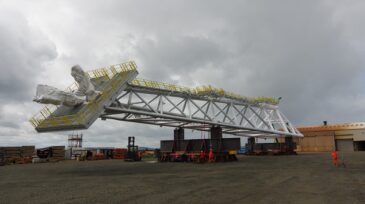
An agreement with DF Barnes is expected to provide financial security for the Scottish fabrication company, which had been on the verge of closure.
-
Why do 80% of megaprojects in the oil industry fail? A recently published book reaches a counterintuitive conclusion on the leadership traits required to run complex projects successfully.
-
As it works to increase production to 1 million BOE/D, Permian mainstay Pioneer is taking a methodical approach to sustaining capital efficiency.
-
US oil production is getting lighter and gas production is spreading as unconventional formations feed export growth.
-
The world is digitalizing all around us. Within the energy sector, the lower-price environment since 2014 has increased the pace of change and the scope of digital integration. But, are you bringing your people strategy along?
-
Abu Dhabi will conduct its first-ever competitive tender for international partners to explore and develop oil and gas blocks onshore and offshore.
-
The United States is producing a growing share of the world’s oil and gas, with a potential impact that remains uncertain. But continuing infrastructure development and technology advances will be critical in the long term.
-
The $50-million investment ranks as one of Total Energy Ventures’ biggest investments to date. Dedicated to China’s energy sector, it will focus on renewable energies, the energy internet, energy storage, distributed energy, smart energy, and low-carbon businesses.