Asset Management

Transaction adds 90,000 net acres and 68,000 BOE/D of production as Crescent expands its South Texas footprint.

SPE Journal is seeking submissions for a special issue on sustainable enhanced oil recovery (EOR), highlighting innovations that boost oil recovery while reducing CO2 emissions and environmental impact. The Call for Papers opens on 15 October 2026.

Shell has reached FID on LNG Canada Phase 2, a major expansion that will double the Kitimat facility’s LNG export capacity to 28 mtpa and strengthen long-term supply to growing Asian markets.
-
 Drilling automation champions met to identify where this emerging technology needs to be by the end of the decade. What they ended up agreeing on most was that the business models used today are largely incompatible with the technology of the future.
 -
This paper describes a successful U-turn trajectory test in South Texas that has created new economic project opportunities for the company and increased optionality within challenged lease spaces across the field.
-
Operator purchases outstanding interest in shallow water producing properties
-
Seven years, and we’re on track to exceed the 1.5°C target established by the Paris Agreement in 2015 to limit global warming by 2030. Instead, we may be turning up the heat to 3.0°C. And in this case, doubling the wager does not hold potential for greater rewards. A recent report addressed the costs of technologies for emissions mitigation and their likelihood of mak…
-
African nation becoming the latest global hotspot for giant oil finds.
-
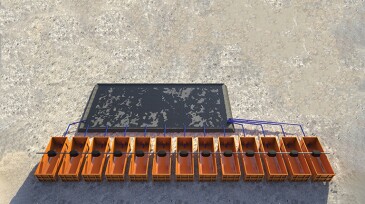
A team of engineers did something no one had done before: a full-scale fracturing test on the surface. The results surprised the fracturing experts involved.
-
Plan to double gas output in order to help ease supply issues in Europe caused by Russian invasion.
-
A successful appraisal well at the field has boosted reserves estimates as high as 1 billion barrels.
-
The Glaucus-2 well confirms the existence of a multi-TCF gas field.
-
The message from a single chart’s data from the first full-scale hydraulic fracturing surface test is simple: Far less proppant flows out of the first clusters passed in a stage than the last ones.