Asset Management

Superior seeks to expand its international footprint through the acquisition, which is reportedly valued at $1.2 billion.

Shell is continuing to reshape its portfolio with the sale, which includes its interest in the BP-operated Na Kika platform and the Coulomb tieback.

By acquiring 100% of Ventura’s outstanding shares, SED Energy Holdings would scale its business into a combined $1 billion company backed by a $1.3 billion contract backlog focused on deepwater drilling, shallow-water tender rigs, and seismic acquisition.
-
 ExxonMobil and its Area 4 partners have awarded $1.1 billion in pre-investment contracts for long-lead upstream equipment supporting Mozambique's Rovuma LNG project. The awards, led by OneSubsea, mark a key step toward FID as development advances on ExxonMobil's largest global investment.
 -
Gran Tierra will refocus its investment strategy to strengthen its portfolio in Canada and Azerbaijan while Maurel & Prom, majority owned by Pertamina’s international upstream arm, grows its South American footprint in Colombia and Ecuador.
-
This contributed article highlights the growing importance of fiber-optic sensing and its potential to advance thanks to emerging quantum technologies.
-
The DOE-backed EGS-Twin project aims to simulate geothermal production systems, helping operators better predict performance and maximize output.
-
After acquiring the block more than a decade ago, Petrobras has finally found oil in the deepwater area of the Equatorial Margin with the Morpho-1 exploration well.
-
The sale of Woodside’s Calypso stake to BP completes the company’s withdrawal from Trinidad and Tobago after decades of operations in the country.
-
ExxonMobil’s Letter of Intent to begin preliminary engineering and procurement work for Mozambique’s Rovuma LNG project bridges the development to a final EPC contract, which Area 4 partners are expected to award following an FID anticipated by year-end 2026.
-
Sixteen companies submitted 69 bids worth $99.5 million in the Big Beautiful Gulf 3 sale.
-
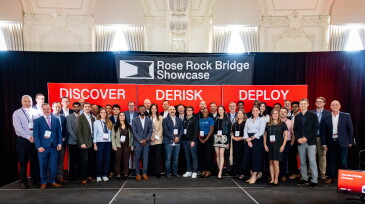
Tulsa Innovation Labs' Rose Rock Bridge program awarded $400,000 to four energy technology startups, bringing AI-driven innovation, industry partnerships, and the potential for more than 135 new Oklahoma jobs to Tulsa.
-
Beetaloo Energy and Halliburton have signed an MOU to advance Beetaloo Digital, a proposed gas-powered AI data center hub in Australia’s Northern Territory that could create a new long-term market for Beetaloo Basin gas.