Mature fields

New rules requiring Mozambique’s LNG industry to supply 25% of production to the domestic market could stabilize gas deliveries to South Africa’s Secunda industrial center as the Pande and Temane gas fields near depletion.

Novel lift systems, AI-driven automation, and real-time engineering models are helping operators extract more value from mature wells.

Operators struggle to understand proppant placement beyond the fracture, and that’s the information that could be the key to boosting EUR.
-
 To further reduce backpressure on low-pressure gas wells and increase reserves in a mature gas field, a gas-ejector project was evaluated and proposed.
-
The complete paper presents a solution that assesses tight matrices and natural fractures at a level not previously achieved. At the tight-matrix level, advanced nuclear spectroscopy is carried out with a new pulsed-neutron device that achieves simultaneous time- and energy-domain measurements.
-
The complete paper presents a large-scale work flow designed to take a vast amount of data into consideration. The work flow can be scaled for projects of any size, depending on the data available.
-
This paper describes a coiled tubing gas lift (CTGL) technique successfully used to restart production from two pilot wells in a mature field in Pakistan that had been shut in since 2015.
-
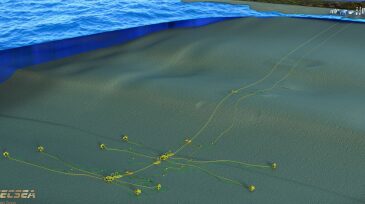
This case study describes how gas condensates within a subsea tieback system behave very differently to condensed water from a wet-gas system and therefore a pseudo dry-gas system needs to be configured differently for gas-condensate developments.
-
Production data from the oldest horizontal wells in the three largest oil plays in the US show that annual decline rates remain relatively high for a long period of time. This challenges assumptions held about production after 5 years and directly affects reserve and ultimate recovery estimates.
-
Production decline with field maturing is a natural phenomenon, but the efforts to mitigate this decline are truly remarkable. Achieving this feat requires not only a deeper understanding of the subsurface process involved but also a total synergy between the various disciplines engaged.
-
The XamXung field offshore Sarawak, Malaysia, is a 47-year brownfield with thin remaining oil rims that have made field management challenging. The dynamic oil-rim movement has been a key subsurface uncertainty, particularly with the commencing of a redevelopment project.
-
To predict liquid-loading tendencies and to identify opportunities for production enhancement, the performance of 150 gas wells was analyzed in two gas fields in India.
-
The complete paper explores technical and economic development options to produce heavy-oil resources at commercial rates and showcases three optimization scenarios of higher recovery efficiency aimed at increasing net present value at the basin level.