Midstream

New rules requiring Mozambique’s LNG industry to supply 25% of production to the domestic market could stabilize gas deliveries to South Africa’s Secunda industrial center as the Pande and Temane gas fields near depletion.

Merger unites two Appalachian leaders and adds decades of drilling inventory.

The Absheron gas field expansion will supply additional natural gas to Azerbaijan’s domestic market and support its export commitments to Turkey, allowing Baku to stay focused on meeting its gas export obligations to Europe.
-
 The decision to cancel the nearly 1,200-mile-long project comes less than a year after construction began and is being met with disappointment on both sides of the US-Canadian border. A 60-day halt on new permits for onshore an offshore US federal areas has also been ordered.
-
The Norwegian provider of pipeline safety and technical verification services announced its withdrawal after actions taken by US lawmakers this month.
-
Operators of unconventional plays face a conundrum—how to dispose of produced water economically without risking seismicity or aquifer contamination. A recent paper and virtual forum offer ideas for optimizing saltwater disposal.
-
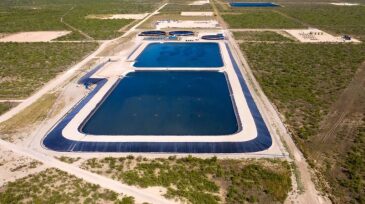
Breakwater’s produced-water-recycling facility has the flexibility to recycle, store, or dispose of water. It has already recycled nearly 5 million bbl of produced water in the third quarter of 2020.
-
Enterprise Products Partners publicly acknowledged the deep slump in pipeline demand out of the Permian Basin by canceling a project at a time when most producers have been quietly postponing US projects.
-
Garden Banks Pipeline was notified that the Sea Robin delivery point was also made available after Enbridge lifted its force majeure.
-
The pipeline continues to operate as courts weigh expedited appeals from the Army Corp of Engineers and Energy Transfer.
-
A platform connecting to the Garden Banks pipeline was undamaged by Hurricane Laura, but Enbridge declared force majeure after inspecting the facilities.
-
Williams Companies announced a near-term goal of a 56% absolute reduction from 2005 levels in greenhouse-gas emissions by 2030, aiming for net-zero carbon emissions by 2050. Why is this significant, and where can emissions be mitigated in the midstream natural-gas gathering and boosting segment?
-
An economic downturn and global pandemic are among many issues US midstream operators are dealing with in 2020, including exposure to upstream bankruptcies, limited M&A activity, and regulatory issues.