Onshore/Offshore Facilities

The legacy of per- and polyfluoroalkyl substances (PFAS) is a persistent problem in many industries, including upstream oil and gas. In this Q&A, remediation expert Grant Scott presents the trouble with these “forever chemicals” and the mitigating efforts being used.

As the pace of new discoveries slows and high-quality prospects become harder to find, oil companies may need to rely more heavily on mature fields to maintain production and support future supply.

A shared digital mindset across subsurface, subsea, and drilling and wells is accelerating well planning at Vår Energi.
-
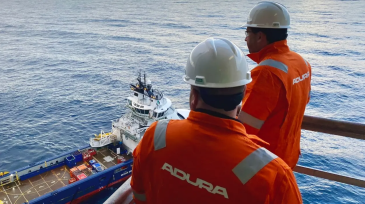
 Adura will become the UK North Sea’s largest independent producer by combining 12 key oil and gas assets, employing around 1,200 staff. It aims to produce more than 140,000 BOED in 2026.
 -
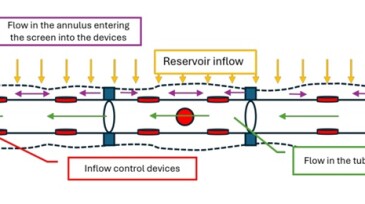
This paper compares various drainage strategies and well completion configurations on the installation of inflow control technology by considering energy efficiency.
-
Updates about global exploration and production activities and developments.
-
A new tubing-conveyed tool combines wellbore cleanout with multi-tracer deployment for production diagnostics and reservoir monitoring.
-
This paper presents an approach to management and interpretation of pipeline-integrity data, ensuring integrity, safety, and reliability of the operator’s critical pipelines.
-
This paper describes the development of a system for comprehensive mapping and asset registration using a digital-twin approach.
-
Of the total approved by ADNOC’s board, $50 billion will be invested in Canada under a framework agreement targeting projects in AI, energy, and mining.
-
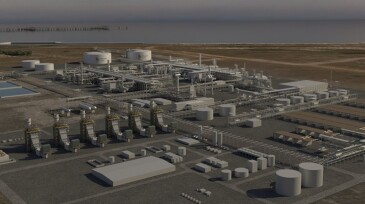
By resuming work on the Rovuma LNG project, ExxonMobil tees up a final investment decision expected in 2026 as East Africa’s LNG hub begins to take shape with three separate projects now in construction.
-
Estimates commissioned by the Australian government suggest that increasing efficiency will lower costs for decommissioning offshore Australia.
-
This paper introduces an AI-driven digital fencing system designed to boost security in oil and gas fields. The main objectives are to improve security and safety of oil and gas facilities while addressing the limitations of legacy physical barriers, reducing false alarms, and eliminating the dependability on the grid in favor of renewable energy.