Onshore/Offshore Facilities

The long-term outlook analysis says a potential shift toward new construction could push 2026 production 3% above 2025 levels.

This paper identifies opportunities and risks associated with repurposing an offshore oil and gas platform for green hydrogen production. Various technical scenarios were investigated for the case study platform, and their profitability was determined using economic calculations. In addition, all the submodels were compared with standard decommissioning costs for reco…

This paper presents a flexible, highly cost- and energy-efficient method of gas separation and CO₂ capture from many different gas mixtures with a large range of CO₂ concentrations.
-
 An increasingly buzzy term tossed around at industry events, “digital twin” is leveraging data analytics, machine learning, and artificial intelligence to improve efficiencies from design to decommissioning.
 -
When a new horizontal well in Asia was incapable of unassisted flow, coiled tubing (CT) was selected for the perforation and stimulation intervention. Mechanical isolation was required to ensure that the stimulation fluids entered only the new zones.
-
Wearable computers are turning heads in the oil and gas industry and appear to be on a trajectory for widespread adoption.
-
Bureau Veritas made available its guide to decommissioning regulations in the UK Continental Shelf.
-
Bureau Veritas made available its guide to decommissioning regulations in the UK continental shelf.
-
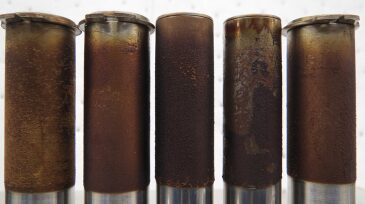
Cold finger tests are a standard method for testing paraffin inhibitors, but there is no standard testing protocol, and sometimes different labs can see inconsistent results. Shell and BHGE studied the root causes of these issues.
-
Ground sensors on assets over a broad area have limited returns on investment if the asset life cycle is less than 10 years, and obsolescence of the technology if it exceeds 10 years. Complementing sensors with aerial remote sensing at scale may help to mitigate these issues.
-
Oversizing a separator ensures meeting the life cycle needs of a facility, but are we setting ourselves up for failure in the long run? With peak rates typically being short-lived at best, or at worse, well beyond actual production rates, more weight needs to be given to the tail-end of production.
-
BHGE opened its largest Customer Solutions Center globally for its inspection technologies business.
-
When two engineers lost their jobs during the industry downturn, they used the misfortune as an opportunity to develop an innovative concept that aims to make it a lot easier to move subsea gas long distances.