Onshore/Offshore Facilities

This paper presents a flexible, highly cost- and energy-efficient method of gas separation and CO₂ capture from many different gas mixtures with a large range of CO₂ concentrations.

This work introduces a novel predictive methodology combining historical metocean data with real-time riser analysis for shallow water dynamically positioned rig operations.

This paper documents the testing, integration, and field deployment of a metal expandable packer used as an openhole toe isolation plug in a deepwater well under high-pressure, high-temperature conditions.
-
 The $206 million deal for the fields offshore Trinidad and Tobago is expected to close in the third quarter of 2025.
 -
The revised report provides upstream oil and gas operators with a framework and guidelines to help select and deploy methane emissions detection and quantification technologies.
-
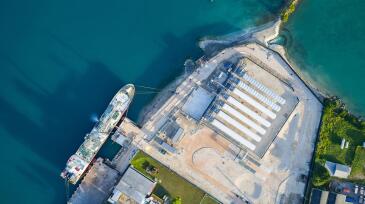
Assets include regasification and power generation facilities along with associated pipelines.
-
The agreement allows BP to maintain control over its stake in the TANAP pipeline, which transports gas from the Caspian Sea to Europe through Turkey, while unlocking nearly $1 billion in capital as part of its divestment program.
-
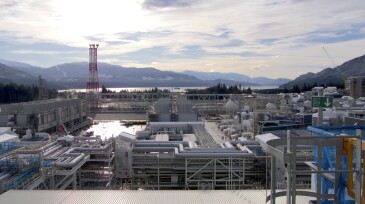
Cooldown cargo is set to be delivered to Kitimat, BC, from Australia in early April, the final step prior to official startup.
-
Argentina’s YPF forecasts the $3 billion oil pipeline and export terminal will carry 180,000 B/D when it goes onstream in 2026.
-
The Louisiana contractor is buying Kystdesign for an undisclosed sum, expanding its underwater vehicle business.
-
The agreement aims to bring the efforts of both companies together to advance digital-enabled carbon-free floating power generation.
-
The Halten East project in the Norwegian Sea involves fields that if developed independently would be considered too marginal to be economically attractive.
-
The production unit for the Balder field in the North Sea is expected to go on-stream in the second quarter of 2025 following the staged tow-out of the FPSO.