Onshore/Offshore Facilities

The long-term outlook analysis says a potential shift toward new construction could push 2026 production 3% above 2025 levels.

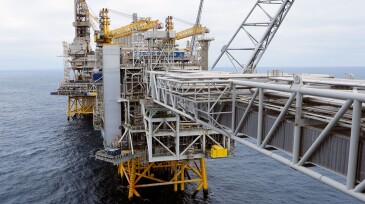
This paper identifies opportunities and risks associated with repurposing an offshore oil and gas platform for green hydrogen production. Various technical scenarios were investigated for the case study platform, and their profitability was determined using economic calculations. In addition, all the submodels were compared with standard decommissioning costs for reco…

This paper presents a flexible, highly cost- and energy-efficient method of gas separation and CO₂ capture from many different gas mixtures with a large range of CO₂ concentrations.
-
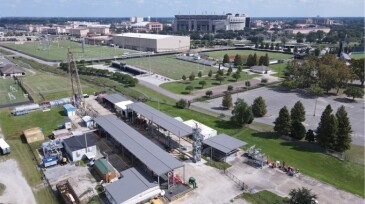
 For more than a century, LSU has shaped petroleum engineering education, but few assets showcase its impact like the PERTT Lab. With six deep test wells and rare reservoir-depth gas-injection capabilities, the facility is helping drive breakthroughs in well control, carbon-dioxide injection, and next-generation energy technologies.
 -
Woodside’s $12-billion gas project offshore Western Australia is expected to produce up to 8 mtpa once it’s complete.
-
The London-headquartered independent acquires position in the US Gulf while preparing Zama for final investment decision.
-
The Norwegian major said it is using artificial intelligence for predictive maintenance throughout its facilities and for interpretation of seismic data from the Norwegian continental shelf.
-
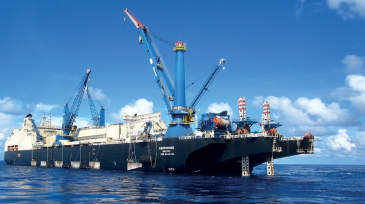
Engineering, procurement, construction, and installation awards made at the end of 2025 are expanding Saipem’s role in Turkey’s two largest offshore gas fields, plus Saudi Arabia’s Berri, Abu Safah, and Marjan oil fields and Qatar’s North Field gas giant in the Persian Gulf.
-
Following a US military operation to arrest Venezuela’s president, analysts say there is no easy fix for the country’s beleaguered upstream sector.
-
The platform brings the field’s installed production capacity to 1.5 million BOPD.
-
This paper describes a data-driven well-management strategy that optimizes condensate recovery while preserving well productivity.
-
This paper details a data-driven methodology applied in Indonesia to enhance flare-emission visibility and enable targeted reduction strategies by integrating real-time process data with engineering models.
-
Experience in subsurface production and lift design is shaping a new generation of geothermal operations built for reliability and scalability.