Onshore/Offshore Facilities

The Absheron gas field expansion will supply additional natural gas to Azerbaijan’s domestic market and support its export commitments to Turkey, allowing Baku to stay focused on meeting its gas export obligations to Europe.
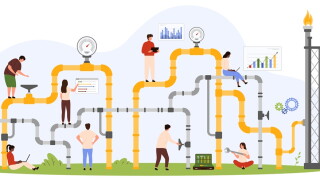
A credible custody-transfer record depends on far more than the accuracy of a single meter. It is the product of an integrated measurement chain. While meter performance supports measurement-system integrity, commercial confidence also depends on traceability, governance, and authorization.

Despite significant progress in capturing associated gas for domestic use, Iraq remains the world’s third-largest gas-flaring country as it aims for higher oil and gas production targets.
-
 To help the industry understand offshore-facility weight predictability, IPA recently conducted a comprehensive study that sheds new light on facility weight performance and identifies the root causes of weight growth, providing guidelines for improving predictability.
 -
The SPE Separations Technology Technical Section (STTS) continues its study of gas scrubbing technology with a special session at the 2015 SPE Annual Technical Conference and Exhibition on 28–30 September in Houston.
-
A simple, practical, and reliable method to detect a gas leak under the conditions of unknown inlet or outlet gas rate, or unknown inlet or outlet pressure, is highly desirable. This paper discusses such a method.
-
Created by the Institute for Energy Technology in Norway in 1979, Olga was the oil and gas industry’s first transient multiphase flow model. A source of national pride, the program has been declared one of the country’s most important innovations in recent decades.
-
In the realm of enabling technologies, multiphase flow modeling has proven to be one of the most important to the oil and gas industry. Without it, nearly all subsea wells would be too costly or dangerous to develop.
-
This paper describes the measures put in place so that the mooring system of the Gryphon Alpha FPSO could be replaced and reconnected on an efficient schedule.
-
The Mars-B project is the operator’s sixth Gulf of Mexico (GOM) tension-leg-platform (TLP) development.
-
Innovation is the life-blood of any high-tech industry, and the operators are the primary beneficiaries of its application.
-
The SPE Separations Technology Technical Section (STTS) will hold a three-webinar series on the theme of gas scrubbing technology this year with the first to be held on 3 March.
-
The presence of slug flow in the riser of the sunken Deepwater Horizon could make a significant difference in financial penalties for BP in the wake of the Macondo incident, an expert said.