Onshore/Offshore Facilities

Despite significant progress in capturing associated gas for domestic use, Iraq remains the world’s third-largest gas-flaring country as it aims for higher oil and gas production targets.

The 2026 Upstream Scale Guidelines establish a common workflow for field measurements, scale modeling, and risk assessment to support more consistent operational decisions.

Shell has reached FID on LNG Canada Phase 2, a major expansion that will double the Kitimat facility’s LNG export capacity to 28 mtpa and strengthen long-term supply to growing Asian markets.
-
 With a production capacity of nearly 20 mtpa, Wood Mackenzie says the project would be the largest single project to reach FID. Novatek plans to spend more than $21 billion to launch the project at full capacity. Startup is scheduled for 2023.
 -
Recent exploration success in the North Sea has motivated Total to invest some $10 billion in the basin over the next 5 years.
-
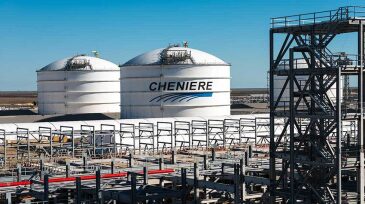
Operator Cheniere now has seven completed liquefaction trains under its control, with two trains done at Corpus Christi and five at Sabine Pass. First commercial delivery from Corpus Christi is still on track for May 2020.
-
What is the definition of offshore-facilities project success in the context of Industry 4.0? Generally, cost, time, and scope are the common project-success indicators. However, I believe we can expand these indicators to the social and environmental areas.
-
The complete paper presents and discusses the authors’ technology-development program regarding very-long oil-tieback architectures (50–100 km) and enabling technologies.
-
As part of an effort to evaluate existing riser systems, an operator launched an inspection and testing program to investigate risers retrieved following well abandonment after a service life of nearly 10 years in the Gulf of Mexico.
-
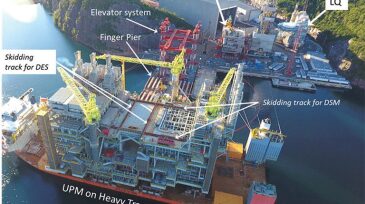
The Hebron platform was successfully installed on the Grand Banks offshore Newfoundland and Labrador in June 2017. It consists of a single-shaft concrete gravity-based structure (GBS) supporting an integrated drilling and production topsides.
-
A common hydrate-management strategy involves the use of large volumes of thermodynamic inhibitors (THIs) to operate outside the hydrate-stability region.
-
The complete paper investigates gas-hydrate inhibition in a simulated offshore environment using a plant extract (PE) as a local inhibitor.
-
This paper summarizes historical advancements in low-dosage hydrate inhibitors (LDHIs) over the past 2 decades, discusses their advantages and limitations, and their selection criteria.