Onshore/Offshore Facilities

Despite significant progress in capturing associated gas for domestic use, Iraq remains the world’s third-largest gas-flaring country as it aims for higher oil and gas production targets.

The 2026 Upstream Scale Guidelines establish a common workflow for field measurements, scale modeling, and risk assessment to support more consistent operational decisions.

Shell has reached FID on LNG Canada Phase 2, a major expansion that will double the Kitimat facility’s LNG export capacity to 28 mtpa and strengthen long-term supply to growing Asian markets.
-
 The next big wave of decommissioning and abandonment projects is set to occur in the Asia-Pacific region, and APAC’s operators are now tasked with finding cost- and time-effective ways of unwinding their huge agglomeration of wells and facilities.
 -
More flexible approaches to financing, production, and trading are crucial to meeting world’s needs, new study finds.
-
This digital deal is helping to make augmented reality a new reality for oil and gas operations.
-
Called Eelume, the underwater drone will perform subsea inspection, maintenance, and repair work.
-
The 15-year deal calls for 1 million tons of LNG to be shipped each year to the Iberian Peninsula. Final investment decision on the project is expected in the second half of 2019, with the first liquefaction train scheduled to start up in 2023.
-
Most underground gas-storage facilities are depleted reservoirs. What makes depleted reservoirs attractive is the presence of existing wells used to produce the reservoir, plus the geologic and engineering knowledge acquired during the development of the field.
-
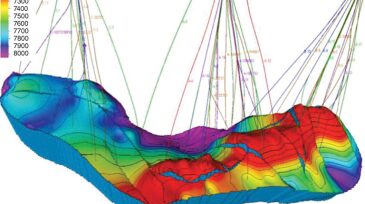
This paper discusses studies conducted on two California offshore fields that may be abandoned in the near future. These studies examined the feasibility of repurposing these fields for offshore gas storage by using their reservoir voidage and existing pipeline facilities.
-
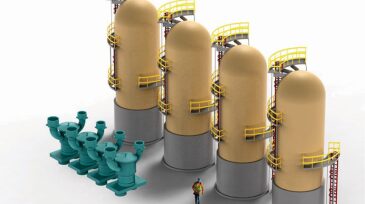
Hydrocarbon processing and treating systems often require large and elaborate surface facilities. When operating in challenging locations, such as deep water or the Arctic, these systems can be expensive. This paper discusses a new adsorption-based gas-separation technology platform.
-
The outlook in the UK is a case study of the squeeze facing E&P in other basins where operators are trying to pay to sustain production with discoveries, while plugging and abandoning old wells, all paid for by the lean cash flow due to low oil prices.
-
The project framework agreement moves the proposed conversion of Lake Charles LNG’s import and regasification terminal closer to sanction, which is expected sometime this year.